wedding

wedding
Showing posts with label finding our faith. Show all posts

Friday, December 26, 2014

Settling into Our Traditions

This is the second holiday season since I converted, and the third since we stopped celebrating Christmas in our own household. The first Christmas, before my conversion and when I had just begun my Intro to Judaism classes, was made underwhelming just by circumstance; we had just moved into our house in early December and life was too chaotic to get a Christmas tree and to find our boxes of decorations. We realized it wasn’t so bad and we didn’t miss it so much because we had enough of it in the rest of the world, and that helped us the next year when we skipped celebrating much more intentionally.

Last year was the first year we deliberately did not get a Christmas tree or Christmas gifts for each other, and I had to grapple with the question of how we create our own traditions and what traditions we can share with family, which traditions we want to try to keep consistent from year to year and which will be flexible depending on whose family we can be with. I feel a little more grounded in that this year, but also still open to changes. Basically we are creating our own Hanukkah traditions and letting Christmas be more open since it’s not our holiday, but our families’ which we participate in secondarily. Some years we may go to my in-laws’ for the traditional Christmas morning bagels and gift exchange; other times, like this year, we won’t go over til mid-afternoon when the other siblings are going over there, and we will have dinner together. Some years we will travel south to visit my parents since our child will be out of school for winter break. I’m not worried anymore about “confusing” our child with whatever happens that day in whichever family member’s home; I feel confident in and comfortable with what we have begun setting up, and grateful for all the love and culture-sharing among family that our child will get to be surrounded by.

Nicole’s brother and his wife, who will raise their children Catholic, will continue coming over to our house for the Passover seder every year. That will be in their kids’ memories, and yet their kids won’t be confused about whether they are Jewish or Catholic. They will know they are coming over to celebrate our holiday with us since we are family. Likewise, our child will not wake up to a Christmas tree and piles of presents on Christmas or have anything else happening at home or within our family that makes them think they are Christian, but they will have memories of how they spend Christmas with their extended family. They will certainly look forward to having dinner with relatives and exchanging some gifts with them. And they might even find the sparkly attraction of Christmas more appealing than Hanukkah. I would be naive if I didn't expect that. Despite its crucially important message about preserving our faith and culture against all pressure and threats, Hanukkah is a minor holiday in the Jewish calendar, and I don't want for us to blow it further out of proportion than it already is in a misguided effort to compete with Christmas. We have our own major holidays, and our child's sense of how being Jewish is honored and celebrated and observed comes from an entire year of rituals, not just this one holiday that may be culturally overshadowed by Christmas (and not without reason - the birth of a savior is understandably a bigger deal; there is not even anything temple-based in the observance of Hanukkah). 

But at Christmas, we will have just recently finished our holiday of light, telling the story of Hanukkah and remembering the importance of maintaining culture and resisting total assimilation. We will have our newly created tradition of having a Hanukkah dinner on the weekend - how nice that there is always a weekend since it’s an 8-day holiday! We will give our child a gift every night, some much smaller than others, and we will also spend that time as a family around the menorah each night, talking and reading and playing games as the candles burn low. We will make latkes on the weekend. We will donate the tzedakah (charity) we’ve been saving all year. We will go to that week’s Shabbat service and watch the big menorah be lit and sing Hanukkah songs with our community. We will attend the synagogue’s family Hanukkah party. And within days or weeks of that festivity coming to an end, we will continue enjoying the larger culture around us - the prettiness of our neighbors’ Christmas lights, the music and decorations in stores and friends’ homes, the Christmas cards that come pouring in from loved ones. We will enjoy it as many non-Jewish people enjoy driving and walking through Williamsburg Brooklyn in the fall to see the sukkahs set up outside Orthodox homes, or as Westerners enjoy going through Chinatown during the hugely celebrated and brightly decorative Chinese New Year.

We are a pluralistic society, and I love that. As much as I love Israel and look forward to traveling there someday, and as much as I think it must also be nice to have most people around you joining in your celebrations, I wouldn’t want to be separated from other cultures. I have always loved learning about and participating in other cultures, while not appropriating them as my own.


Winter is a dark, dreary time, and it’s beautiful that several cultures have festivals of light and giving and family and celebration for us to look forward to and to keep us going until the days begin lengthening again. 

Sunday, August 31, 2014

Why I Chose the Reform Movement

Orthodoxy builds "a fence around the Torah," which means making rules extra strict, stricter than actually mandated by the Torah, to make sure you cannot come even close to breaking a commandment. Contrary to (non-Jewish) popular belief, Orthodoxy is not just based in the Torah, since a ton of questions are raised and go unanswered if you were to just read the text. It's based on how a bunch of rabbis and sages decided was the best way to enforce and live out the Torah. They debated endlessly and came up with intricate rules to give people very specific answers on how to live out some of the quite vague laws set forth in the Torah. And this is amended all the time - for instance, not turning lights on and off on Shabbat was clearly not a relevant rule three hundred years ago. So when electricity was invented, they again had to put their heads together and figure out how to interpret ancient texts to apply to this. (I do wonder, when you use a loophole like asking a non-Jew to turn the lights on for you, is the point being missed?)

I'm not dismissing the strict Orthodox guidelines because they come from rabbinical consensus rather than the Torah. I love Talmud study even more than Torah study; I get so energized by watching the debates come alive through the text, and the brilliance in the sages' thinking astounds me. But people look at things differently, and I don't think that taking everything so literally and worrying about the exact right way to do things is necessarily the best way to interpret and live Jewish tradition.

For example, in regards to the following verse from Deuteronomy 6: 5-9 which we read at every Shabbat service and which is inscribed on the scrolls within our mezuzahs:

You shall love Adonai your God with all your heart, with all your soul and with all your might. Take to heart these instructions, which I charge you this day. Impress them upon your children. Recite them when you stay at home and when you are away, when you lie down and when you get up. Bind them as a sign on your hand and let them serve as a symbol on your forehead; inscribe them on the doorposts of your house and on your gates.

Orthodox Jews take every piece of this literally and have come to a consensus on how to live it out. They say the Shema prayer when they wake up and when they go to bed. Orthodox men and some women wear tefillin during their morning prayers, which are small black leather boxes that actually contain verses of Torah and are wrapped around their upper arm and hand ("bind them as a sign on your hand") as well as on their forehead ("and let them serve as a symbol on your forehead"). Mezuzahs fulfill the last part of this about inscribing on the doorposts of your house.

Much of the Torah is like poetry to me, and the symbolism and messages behind the stories I find much more powerful and relevant than the literal details. Likewise, I find much more meaning in a symbolic interpretation of the V'ahavta above. The line about binding God's instructions as a sign on your hand to me means letting it show in your actions. Talking about our hands, like the expression "having blood on my hands," classically symbolizes what we are responsible for doing and not doing. How can we live and act in a way that pleases God and makes our lives valuable? How can we hold ourselves accountable for where we fall short and work to better ourselves? Meditating on that to me is infinitely more powerful than literally binding God's instructions to my hand. 

As for the line about being a symbol on our forehead, again, I think it's much more powerful to consider this symbolically in how we keep God's instructions on our mind. Do we think about them? Do we consider how this should play out in our lives? Do we stop to think about our beliefs before we make choices to ensure they are in line? Have God's words reached our hearts, or do we read them rotely and then go back to thinking about our next distraction? So much to meditate on, and I find that assists in my spiritual growth muh more than having actual boxes containing the instructions on my forehead.

But I do have mezuzahs. For me they are really such a concrete reminder of my Jewishness and of God's presence. I confess that I hardly notice them inside my house. They so quickly became part of the decor, and I don't tend to catch such small details in my periphery as I'm going from room to room. But in the few seconds it takes me to lock or unlock the door to the house, forcing me to pause, I always note the one outside and usually give it a little caress on my way in or out. It just reminds me of who I am and what is important to me in the midst of such a routine activity and before I start or end my day. I treasure those small reminders, so that is something that I have incorporated into my Judaism.

And that is the crux of liberal Judaism - studying where these traditions come from, wrestling with what that means for us individually, and finding a way to observe that is true to who we are and what we believe. Because if I start strapping boxes to my arm every morning out of obligation, I can guarantee you it would have no meaning to me and that the beautiful words of the V'ahavta would be completely lost in the details of an activity that, to me, is so far from what God intended us to take from that passage.

It annoys me when people think being Reform, Reconstructionist, or even Conservative is the "easy" way to be a Jew, or when they dismiss it as "picking and choosing." It irritates me that some people think that one would align with these movements as a shortcut because, meh, Orthodoxy is just too difficult. Being a liberal Jew is not a shortcut or a cheat. It certainly can be if one wants it to be, simply because you will not be judged for what you individually choose to do or not do in your observance. So if someone just doesn't want to be bothered with certain things even though they feel those things are important, they can do so relatively invisibly within Reform. We are all on our own journeys and have made our own choices. There is undeniably a lot of freedom in that, and there is not within Orthodoxy where everyone is expected to be living in exactly the same way (though clearly that strict level of observance feels comforting and rewarding to those practicing it). But for a liberal Jew who is conscientious and actively engaged in their own spirituality and Jewish identity, liberal Judaism offers many dilemmas and hard choices. You have to educate yourself on a rule or custom, wrestle with whether or how it is meaningful to you, and then make the choice to observe or not observe, and how to observe, based on that. That's not as easy as it sounds, because you may understand the meaning in something that is still very, very difficult for you to follow, especially when you are not surrounded by a community who is all following it. 

For example, if my own personal research and spiritual struggle around kashrut (the kosher laws) had led me to feel it was spiritually significant to me and would connect me more to God and/or to my community, it would be extremely difficult to move in that direction when my own rabbi enjoys shrimp and my wife's favorite food is bacon - both things that would be terribly difficult for me to give up. I would have to be very self-disciplined and would have to seek out the few other liberal Jews who keep kosher in order to feel supported. My own personal research and struggle did lead me to feel the need to observe Shabbat by not working, and this is definitely not always easy. I've had to turn down opportunities to make extra money or to be flexible with the possibility of going back to work only part-time after having a baby. I've had to suck up a crappy scheduling change to make it fair that I don't work occasional Saturdays when other supervisors do. For someone who is Orthodox, this would be easier because everyone within their community observes Shabbat this way and it's unthinkable that any of them would go to work. It just wouldn't even be an option. But within my own temple community, there are many people who work Saturdays without blinking. They have chosen other ways to make Shabbat separate from the week and don't feel the need for work to necessarily be the determinant. That makes it more of a challenge for me to practice this on my own.

It's not "the easy way" to have to put so much thought into every single way of being to ensure you are doing what's meaningful for you and that you have the willpower and self-discipline to keep it up when it's not consistent in your community. In a way, it could be seen as easy to just know without a doubt that you have to follow certain rules and to be ensconced in a community in which everyone is doing that and would gasp and pull you back on track if you were to slip. I enjoy the struggle and the self-accountability. I appreciate immensely that every choice I'm making is what makes me feel more solid in my Jewish identity and feel closer to God. I feel good about not doing anything just because I feel obligated to even if it is antiquated or illogical or seems to lose the point through all the obsession over details.

That is why I made MY choice. And I'm glad that all Jews have the ability to affiliate with a movement that best reflects their needs.

Thursday, June 5, 2014

Oh Shavuot, You Get Me Every Time

Shavuot is the harvest festival holiday at which we recall the giving of the Torah and the Ten Commandments at Sinai and remember how we made a decision to come together as a community, as one faith, with certain laws and traditions we agreed to uphold. We committed to God and God committed to us. We had both a personal and a communal experience of revelation. At Shavuot, we also read and study the Book of Ruth, who was a convert that made her own personal commitment to God, Torah, and the people Israel.

Last year, this holiday fell in mid-May, just a month after my conversion. The holiday holds so much significance to me personally as a Jew-by-choice, and I became so emotional in the service last year. I had full-on tears streaming down my face during several parts of the service, and my rabbi came up to me immediately afterward to check in with me and hug me. I told her it felt like coming out of the mikvah again, that feeling of being overwhelmed by awe and gratitude. It made sense to me that it was such an intense day for me then, but I don't think I expected this to hit me with the same power over a year later!

The holiday began the previous evening with Tikkun Leil Shavuot, a traditionally all-night study session that we do for a few hours. It's traditional to eat dairy on this holiday and people usually make cheese blintzes or cheesecake. I went a little nontraditional and made a tres leches cake, which earned rave (and heartwarming) reviews. We read the book of Ruth with discussion, and then Cantor and Rabbi each taught from it using a different perspective. We got so caught up in conversation that we went way over the time and had to stop ourselves. Then we went to the sanctuary for a brief ritual wherein we talked a little about the Ten Commandments (such as how the first half is about belief in God but the second half is about how we treat others, showing us that how we live is even more important than how we believe). We ended by passing around a Torah scroll so we could each have our moment holding it. It was a simple but powerful little ceremony that made me understand why people study all night in preparation for spiritually receiving Torah. This felt like pausing a movie at the critical climax to go brush your teeth and go to bed before resuming it the next day!

I took the bus to temple, though Nicole had offered for me to drop her off at work and take the car. I liked doing something a little different, something that required a little more effort than how I usually get to temple. It made me feel like I was making a bit of my own trek to Sinai. I thoroughly enjoyed the 10 to 15 minute walk up to the road with the bus I needed; I smelled the flowers, heard the birds and mowers, felt the breeze, watched people gardening. Then I got to temple early and was the first one in the sanctuary. I just sat there soaking up God and letting myself feel that gratitude and wonder, and I was soon crying before it had even begun! I got pulled back out of it as people started coming in, but then had a few other breakdowns throughout the service, just feeling the enormity of how Judaism has impacted me, how very fortunate I am to have taken every step in my life that led me to where I am now and to this beautiful discovery that has changed my life.

I left feeling utterly at peace. The intensity and excitement and anticipation leading up to my conversion versus my life since then reminds me of planning a wedding versus settling into the actual marriage. Things have calmed down, I feel settled and secure and comfortable. I even come to take it for granted because it's my normal now. I really appreciate having an opportunity, at least once a year, to reflect on that period when I formally chose Judaism and made my own commitment. It's beautiful to continue having a communally sanctioned opportunity to recommit and to not take it all for granted for at least that one day, but to thank God for having brought me here and given me something so dear to me. It's a chance to really appreciate my community, my clergy, my faith, my traditions, and my life in a newly refreshed way.

Sunday, May 4, 2014

Allow Me a Moment of Sappiness

Last week, I unintentionally broke down crying to my rabbi about our fertility journey. I was understandably experiencing the raw emotions of the week, which I won't discount or excuse, but I was also just coming down off of artificially elevated levels of progesterone for an artificially long stretch of time. I was very fragile, with my emotions just barely under the surface. I could hardly keep tears back at very random times. Rabbi came to check on me after our workshop last Saturday, and I just broke down. She talked to me for a full half hour about it and then invited me to come talk with her more privately the following week when I would be off of work after returning from a trip south to visit my family. Sometimes she didn't speak and just let me cry and be emotional, without her trying to rush me out of that place because it made her uncomfortable. And she also offered some beautiful and reassuring perspectives. I left feeling like a weight had been lifted off of my shoulders.

I've now encountered enough other rabbis to realize that mine is one of a kind. She's not just great because I'm a zealous convert and "I love Judaism and RABBIS ARE AMAZING!!!" I mean I wish that were true, and there certainly are many amazing and wonderful clergy out there in the Jewish world. I've been fortunate to encounter a couple of them. But many are just...not the whole package. Maybe they are super smart but not so engaging and inspiring. Maybe they are kind but not strong leaders. Maybe they do wonderful work with their elderly congregants but are totally awkward with the little kids. Maybe they are great congregational leaders but are hard to relate to on a more personal level.

Let me tell you about my rabbi.

My rabbi was not raised with much observance and came to love and embrace her Jewish identity in young adulthood. She worked in a completely different arena for some time before hearing the call to be a rabbi. She can relate to both converts and Jews seeking more observance than they were raised with. She understands learners. She gets the excitement and the significance of discovery and rediscovery.

My rabbi can be completely at ease with the elderly who seek her out for support around phase-of-life issues. She can connect with them on a sincere level, and they have the utmost respect for her. Then she leads Tot Shabbat and is like a cast member of "The Wiggles," commanding the full wide-eyed attention of ten or fifteen toddlers as she dances and sings and gets down on her knees to act out stories or lyrics as if she were thirty years younger. The children are smitten by her, coming up to touch her and hug her and tell her stories, any stories, to have her attention.

My rabbi is the sole rabbi of a congregation of 270 families plus non-members who are regulars, and she knows everyone's name. At any congregational meeting or service or class, I have never seen her unable to call on someone by name when their hand goes up. She is perceptive and attentive. She seeks out individual people to ask how they are or to follow up on a trouble or a joy that they previously shared with her.

My rabbi always has comforting advice and guidance to offer, and it's never from a position of being higher up or more enlightened. In fact, almost everything she offers comes with a story or example from her own life where she has felt similarly vulnerable or struggles with something. She doesn't pretend to be anything less than a fallible human who is just another Jew trying to do her best and learning a lot along the way.

My rabbi is an incredible teacher. She knows how to meet her audience where they are and explain things in a way that that particular demographic (or mix of demographics) can understand. She doesn't lecture; she offers information and then engages people in discussion. She knows what questions to ask to get us thinking and talking, and she takes just as much pleasure in learning from our unique perspectives as she does in sharing her own. And she is smart as a whip! She can tease apart the driest Torah portion about the color and fabric of priestly linens and somehow make it completely relevant to our modern lives.

My rabbi is never ruffled and can speak off the top of her head without preparation whenever she needs to. She can say a beautiful blessing spontaneously, on any occasion and for any individual, and make it incredibly personal, meaningful, and beautiful. She can redirect a heated conversation or a quirky, over-the-top participant who is dominating the conversation and irritating others without being short or dismissive. She is a peacemaker and a peacekeeper.

My rabbi has a soft and quiet demeanor but is tough and fierce under the surface. She will advocate and fight for social justice, and rally others around her to join in, but does it in a gentle yet firm way that ensures she is heard and not shut down or dismissed.

My rabbi does not clock in and clock out. She goes way beyond her job description to offer comfort to her congregants and to participate in their lives (as invited) to help them live more Jewishly or to infuse more spiritual meaning into their lives. I am still in awe that she would offer to spend an entire Saturday afternoon in our home, helping us affix mezuzahs and blessing our home. And yet she is still able to create and enforce appropriate boundaries and be protective of her time with her family.

My rabbi always seems in charge but never in power. She gracefully assumes a leadership position without ever giving off the impression that she is controlling. And that's because she's not. She welcomes opinions, discourse, suggestions, disagreement. She requests it. And in the end she will make sure the right thing happens, whether or not it originated with her. She is open, receptive, democratic.

My rabbi inspires curiosity about our traditions and a thirst for knowledge. She makes people feel safe, not judged, unconditionally cared for. She makes us feel at home.

Thursday, November 28, 2013

My First Hanukkah - Creating Our Own Traditions

Last year at Hanukkah, we were in the middle of our Intro to Judaism course to study for my conversion and had just moved into our house, so our Hanukkah celebration was a little slapdash. We gave each other a few presents all on the first night, and we lit the electric menorah that my parents had given us, placing it in our sunporch window at the front of the house. That was pretty much it.

This year we made sure to get each other eight gifts and are only opening one per night. We have more decorations around the house that we bought on clearance for 90% off last year after the holiday - a little sign, two sets of dreidels, a crystal dreidel for our dining room table, dish towels, and two menorahs. We used the book our rabbi gave us that has blessings for home rituals to say the blessings for lighting the menorah.

My family is infamous for the quirky things we make into traditions. Everyone has traditions, of course, but we can be very ritualistic about the most arbitrary of things. Like the recent development in the past decade of a tradition of having a Krispy Kreme donut on Halloween morning - where did that come from and how did it become a thing?? It's one of the things I love about us, and Nicole is very patient and flexible (and sometimes amused). Since Hanukkah is new for me, the creation of traditions were just sort of tumbling out as we went along with whatever seemed "right" to me. So here is what we have already set into motion after just one season - and actually, just two days so far of one season!

We light the menorah and say the blessings. Then we put the next bulb into the electric menorah. Then we sit at the table and have "family time" until the candles have burned out, approximately an hour or less. This family time can include exchanging a gift, eating dinner, reading together, talking, anything. But we stay around the table. A gift cannot be exchanged until the menorah is lit, signifying that the next night of Hanukkah has begun. You can pick which gift you'd like to open from your pile, unless the giver has a reason to ask you to open a specific one that evening.

I am loving Hannukah rituals. I love that it lasts for EIGHT DAYS. It helps it not to be so anticlimactic. For eight days we get to light our beautiful menorah and exchange a gift and celebrate. It's not over too soon. I also love exchanging one gift at a time. I feel like it gives us a whole day to really enjoy that item and revel in it rather than having something get lost in the pile. Tonight Nicole gave me a lush bathrobe, and I will cherish it all day tomorrow while I eagerly anticipate the next gift. Oh glorious torment! I looove dragging it out like this.

Nicole does not love the torment quite as much as I do! She misses waking up to a pile of presents. She misses getting everything at once, and dragging it out day by day is less enjoyable to her than it is to me. We have always been different in that sense - I love the anticipation of a happy thing or event and it kills Nicole to wait! But even as she misses this, her eyes light up as we kindle the menorah and she joins me in the blessings without me having to ask her or give up trying. It warms my heart to watch her love of Jewish traditions grow as we go through the year. I just have to meet her halfway on this to help ease the tension for her. Like tonight we had Thanksgiving dinner at her parents' house, and as soon as it got dark (which was like 4:30!) she was antsy to get home and open another present. We lit our menorah there and I told her that as soon as it had burned out, we could go home. Once she knew what to expect, she was fine and relaxed and enjoyed the family time until it was time to go. I just had to keep my promise.

Nicole's mom said she hadn't realized Hanukkah was coming so soon and said that she had to get better about that and have a gift for us. I told her that we are happy to celebrate Hanukkah within our little household, and that we are fine with having our families exchange gifts on Christmas which is their holiday. I said that our kids will grow up knowing their extended families on both sides celebrate Christmas, and we are okay with them being included in that. We are secure enough in how we are creating a Jewish home that we can allow them to celebrate our families' holidays with them. Similarly, Nicole's brother and his fiancee, neither of whom identify as Jewish, come to our house for Rosh Hashanah dinner - they don't observe the holiday as a New Year for themselves and won't with their kids, but they come to celebrate OUR holiday with US, because it's about coming together as family with what's important to us. If my parents lived here, they'd be coming over for dinner too! It's the family togetherness that matters, and I'm about building connection and inclusion, not barriers.

Speaking of "Thanksgivukkah," I made latkes for the first time this year (and yes, said a "Shehechiyanu" at the stovetop!). Nicole has made latkes all her life, so it was very meaningful for me to be able to join in that tradition. It also helped me in a subtle way to bring Hanukkah into our Thanksgiving dinner since I knew it would otherwise by overshadowed. I used a recipe I found online for sweet potato latkes with homemade cranberry applesauce, and they were delicious! Nicole doesn't eat sweet potatoes and ate at least four of these. They were praised and quickly devoured by Jew and non-Jew alike, and I was so, so happy.

Yes, I am nostalgic for some of what I left behind. Of course I am. But I am so happy and fulfilled by what we are creating together!


Saturday, November 16, 2013

Making a Jewish Home

Early in the year during one of my meetings with the rabbi to study for my conversion, I asked her if there is any Jewish tradition around blessing the home. I told her that my multi-cultured coworkers told me that their traditions and cultures all have something like that, and that it is the first thing you do when you move in, so I was curious, and also we had a mezuzah we'd gotten as a wedding gift that we still hadn't put up because we didn't really know how. She hesitated and then said, "We could do something like that if you wanted. Kind of a Jewish housewarming, you could have some friends and family over and make an event of it." I said I'd love that, but inside I worried that her response meant there WASN'T really anything like that and she just didn't want to embarrass me so she was kind of trying to create something. Which in turn embarrassed me. So I didn't plan to bring it up again.

At my conversion in April, I received several more mezuzahs as gifts. Then I went by Rabbi's office in August to say goodbye after Nicole arrived to pick me up from some event, and I was talking to her about our garden and she said, "Did you ever get those mezuzahs up?" I said, "No, we still haven't!" And she said, "Do you still want me to come over and help?" And I said, "Yes, I would LOVE that!" I was so excited that she had brought it up several months later. It made me feel like she hadn't just been pacifying me in the moment earlier in the year, or trying to keep from hurting my feelings, but actually thought it'd be something nice to do. So we said we would aim for October or November after the High Holy Days were over. I also told her to bring her husband and daughter and we would have a nice, intimate gathering with some snacks, nothing fancy or elaborate.

So it happened today, and it was just the perfect day. We had my in-laws over, so my carpenter father-in-law did the actual hammering. We also had my friend Allyson and her husband Josh over. We had also invited A&A (our fellow queer couple from temple) and their two little boys, but they canceled the night before because one of the parents had pinkeye.

Nicole and I have spent over a week scrubbing and cleaning and re-organizing the house and even finalizing some much-procrastinated decorating, like putting up our wedding photo canvas. I took such pleasure in preparing for this little event. We went shopping for a TON of healthy and wholesome snack foods Thursday night, and today after Torah study we zipped home to get everything together before Rabbi came over at 2:00. So while she was busy doing Tot Shabbat and a Hanukkah workshop for preschoolers, we were cutting up cheese and fruit, baking brownies, changing out our placemats, chopping up veggies and making dip, and wrapping the little Hanukkah gift we had bought Rabbi's 7-year-old daughter.

I'm pretty sure I was already getting misty-eyed as soon as we opened the door for our rabbi and she gave me a hug. There was something so beautiful and emotional to me about welcoming her family into our home and hosting them. There was also a little bit of the feeling of a second-grader whose teacher comes over - "and look, this is my room and these are my toys and this is my cat!" It was such an unusual way to interact with her, to have her in OUR space instead of at temple, and I just loved it. Everyone stood around the kitchen and then around the living room chatting cozily as if we were all family. My heart was so happy and full.

After almost two hours of talking, I started to worry that we were keeping Rabbi and that she was just too polite to rush us to the mezuzah-hanging. I didn't want to assume that she planned to spend her entire afternoon here when she just offered to come over and help! So when she took her daughter to the bathroom, I got out the mezuzahs and started arranging them on the dining room table. I figured when they came back out, she could take my cue and approach me about them and get things started. But she walked right past me with her daughter who wanted to go spin the dreidels on our coffee table. That was my first major indicator that Rabbi was having a good time too. That we weren't imposing ourselves on her, or putting her out of her way, or squeezing ourselves into her schedule. She truly enjoyed spending time with us in our home.

I actually had to bring it up when Allyson and Josh said they had to get going. I asked if we could put up the one on our front door all together before they left, and that got us started. Rabbi explained to everyone what the mezuzah is and said some nice words about our new home and the people in it and taught us the blessing for affixing the mezuzah. We recited it together and then my father-in-law affixed it. Rabbi said, "Is this a moment for a Shehechiyanu?" That's the blessing for new things and special moments that basically thanks God for bringing you to this place. It's a wonderful way to freeze a moment, fully immerse yourself in it, and appreciate what is happening. I said, "Since I'm already crying, I'm pretty sure it's appropriate to say it!" and we all sang it together.

We moved to the next one, which is shaped like a Torah scroll and was given to us by Nicole's grandmother. We chose that doorway because the sunporch is used as our "study" and has all our Jewish books and our Torah. Rabbi asked us to read the words on it, and I said out of insecure panic, "We can't read Hebrew! We're working on it, though." Then after I paused for a second, I recognized the first few letters and said excitedly, "Wait, SH'MA, that says Sh'ma!" I was so proud of myself reading those three Hebrew letters. So then we said the "Sh'ma" prayer all together.

The next mezuzah is shaped like a tree of life, and we put that in our living room because that will be the center of our family life at home. So then Rabbi sang a song about the tree of life that none of the rest of us could sing but was really fun!

The next one was made out of copper and had been given to us as a wedding gift by Allyson over two years ago. After that we hung up two more outdoor ones, the rainbow one given to us by A&A for my conversion which we affixed in the doorway to a storage room in our basement, the one our friend Jen gave us as a housewarming gift a year ago which we affixed in the doorway from the kitchen to the basement, and then finally the one with the pretty pink flowers which we put in the doorway of our bedroom. Because it was the last one, Rabbi gave everyone a chance to say out loud good wishes for us and our home.

Rabbi also gave us a housewarming gift of the book On the Doorposts of Your House which has guides to different family and home rituals, and her husband included bread, salt, and a broom which he said is a tradition of many European cultures.

The whole day was so awesome. I loved having Rabbi and her family in our home, and I loved the specialness and meaning she helped infuse in the ritual of affixing our mezuzahs. It would not have been nearly so special if we had just gone around nailing them up on our own!

Edited 11/17/13 to add that I just realized yesterday was the one year anniversary of our closing on our house. On 11/16/12, a Friday last year, we giddily grabbed the keys to OUR new house, which burned a hole in our pockets during that evening's Shabbat service. How incredibly touching to realize that, without planning it or even realizing it, exactly one year later we gathered with people we love and sanctified our home by affixing mezuzahs and saying blessings together and celebrating.

Sunday, November 10, 2013

Life Updates

1. Last Friday night, Deborah Feldman, author of Unorthodox: The Scandalous Rejection of my Hasidic Roots, came to speak at our Shabbat service. First of all, just HOW FREAKIN' AWESOME to have a bestselling author come to our humble synagogue and spend time with us. She is a natural storyteller, so her speech was riveting, and then she wrapped it up in a decent amount of time so she could take questions and engage with the congregation's curiosity. She signed books at the oneg (shockingly few of us had actually brought the book to be signed) and we got to have a little chat there too. I told her that coming from the South, Judaism itself had been quite a mystery to me, and even now after my conversion, the ultra-Orthodox world she came from was completely foreign and shocking. (Ultra-Orthodox sects, contrary to what one might assume, did not actually exist until fairly recently...it came about as a response to the Holocaust, for Jews who believed that was a punishment for assimilation and felt they needed to make themselves stand out isolated from the world far more than they were.) Deborah said, "You left the land of barbecue to come here?? Please tell me you can still have pork ribs!"

Rabbi on the left, Deborah Feldman on the right

2. Last Sunday was the New York City Marathon, and my brother-in-law's fiancee ran in it. She was never an athlete and just took up running about two years ago after she got out of law school and before she found a job. Talk about inspiring. Nicole and I grumbled privately to each other for a while about having to go into Manhattan on such a crazy day, but we ended up having a great time. It's such a different feel from, say, a parade. Participants are working so hard and the spectators are there to support and cheer on, not to be entertained. We gathered at two different spots to see her pass by, and then we were meeting up with her friends and family at a bar afterward where my brother-in-law had rented out a little loft area for the group.

Watching the race was unexpectedly emotional for me. Seeing two different blind runners who held a rope circle with another runner to keep in line, people running on blades (the prosthetic limbs designed for athletics), people from all over the globe, a woman bursting into tears of exhaustion as soon as her partner stepped out to hug her at Mile 23 so then he ran alongside her for the last three miles.


Between our second spotting and the time we would all be meeting at the bar, there was over an hour to kill. And as we turned to walk with everyone, we realized we had been standing right in front of the Jewish Museum the whole time. I have been wanting to see the Chagall exhibit that leaves in February and figured, like always, we would never end up making it in to see it. We're both such homebodies and it takes a lot for us to commit to spending a day in the city, and the museum is not in a location convenient at all to Penn Station even, which makes it require extra motivation. So we looked at each other and lit up and both said alternately, "Really? Do you really want to? Can we? Is it okay?" Meanwhile my brother-in-law was encouraging us to go. He was so grateful that we had all come out to support his fiancee and wanted us to get out of the cold and do something we'd enjoy while we were there. We didn't have to be told twice.

The Chagall exhibit was awesome. He was a Soviet artist who moved to France and then to the US right before the war, so he had a lot of guilt and distress around what was happening to his fellow Jews back in Europe during the Shoah. I'm not even close to what one would call "cultured" or "a sophisticate," and I could appreciate the very obvious change in his works from before the war to during the war. They got much darker, lots of black and red and sad images. It was fascinating. Then on top of this, we got to see the rest of the museum where we'd never been. An intimate and quiet spontaneous date in the middle of a packed, crowded, and loud day.

3.  I'm super excited about "Thanksgivukah," the very rare, less-than-once-in-a-lifetime coinciding of Thanksgiving and Chanukah. I've already found a pumpkin latke recipe for the combined Thanksgiving/Chanukah dinner. The Jewish world is lit up with excitement and creative ideas over this holiday combination, and it's such a fun energy. But I have one minor issue - I don't know how to decorate!! It already feels strange sending holiday cards before Thanksgiving, but when to change out the orange and brown leaf-themed kitchen towels for the blue and white Chanukah towels is causing me more than a minimal amount of distress. We have a little box that looks like a miniature crate and says "Apples, 50 cents" on it that we use for our napkins and salt and pepper shakers on the dining room table. It's perfect for fall and Thanksgiving. But then we have a nice blue basket with white snowflakes and silver tinsel that would be perfect for the same purpose for Chanukah. When do I trade them out??

This is the fatal conflict: I hate decorating for one holiday before the preceding one is over, and I love decorating far in advance for each holiday so I have time to enjoy the decor. So what to do you do when they happen at the same time??

Our rabbi offered to come over and help us put up our mezuzahs, BLOWING MY MIND as to the role Jewish clergy can play in your life....this is beyond incredible of her and I'm excited out of my mind. This is next Saturday and because I'm ridiculously psyched for it, and because she won't exactly be a frequent visitor to our home, I want everything to be perfect. We've been toying with a date for a couple of months, and I had been very excited about cutesying my house up with fall decor...til we finally confirmed a date that is only two weeks before Chanukah, and now I want her to see our Chanukah decor! But while Chanukah colors fitting a winter theme is normally perfect, it's definitely not while we're not even at Thanksgiving yet.

Yes, I could put both baskets out, both sets of kitchen towels. But boy do they clash, and it goes against the perfectionist in my brain (who only makes rare appearances but this is most definitely one of them).


Chanukat

Thursday, September 26, 2013

Holiday After Holiday!

One of the greatest joys I am realizing and embracing about Judaism is the number of holidays. This past month has just been so lively and engaging, contemplative and joyous. Today I will just speak to Yom Kippur, and I will try to keep it brief!

Rosh Hashanah was my first joy, of course, but my (cranky, hungry) Yom Kippur had an unexpectedly beautiful ending. I was thinking throughout the day how frustrating it was that the physical effects of the fast were doing the opposite of what is probably intended - I was unfocused and irritable. It wasn't even so much about hunger, because I got used to that. It was about my body just not feeling right. My head was hurting and I was exhausted and snippy and could barely keep my eyes open during services. How is that supposed to help me atone? I asked myself crankily.

Initially I struggled with this because I felt like the fast is pointless if I'm feeling this way about it rather than being super pious and penitent and graciously self-denying. But as the sun set and the community slipped into a state of relief and triumph ("we did it!! we survived! now let's go eat!"), I realized how much holiness there is in devotion even when you don't want to do something. I don't have to be HAPPY about fasting. What's important is that I did it anyway. I spent the day in prayer even when it was hard to stay focused because I felt physically unwell. Sometimes you do things for people you love even if it makes you grouchy, and you try to do it without complaint, but what matters is that you're doing it.

Yom Kippur was on Shabbat this year, and I was disappointed that I would miss our normal Shabbat joy and Torah Study. However, the upside of this is that the end of Yom Kippur coincided with the end of Shabbat so Rabbi slipped right into a Havdalah service. Havdalah services mark the transition from Shabbat back into the normal week. More traditional Jews have these services every week, but Reforms generally don't. However, our synagogue offers them two or three times a year so that people can still get the experience and so that we don't forget what it's about. I have only been to one, because the other one this summer was while I was in Chicago.

The one I went to was with the Cantor, as our Rabbi was out of town. It was in the auditorium where summer services are held, not in our sanctuary, and he did it sort of with commentary. A "learner's Havdalah" if you will. This was great for learning, since I had never been to a Havdalah service before, but the service didn't just "happen" since it was all being explained so I didn't get the feel of it. As Yom Kippur ended, taking Shabbat with it, Rabbi just started doing the Havdalah service and I got to feel it. She just went through the motions so naturally, with no explanation, as everyone was singing joyously with relief and a sense of accomplishment. And it was a FULL room because of Yom Kippur. It was so unexpected and so emotionally overwhelming that I was sobbing as I watched Rabbi and listened to the unfamiliar songs that I couldn't sing along with. Beautiful, beautiful few moments.

Monday, September 16, 2013

Opening Our Home

After much deliberation, we decided to take in international students through a program at the college where my mother-in-law works (Nicole's own alma mater). My mother-in-law took in international students through this program for about two years, and has been on hiatus for about the last year. We held off on this conversation for the few months that we were renting out a room to Nicole's friend's girlfriend, and we started talking about it again soon after she moved out in June.

We have two spare bedrooms. One is set up with a twin cot, desk, and chest of drawers, and the other is a guest room with a full bed and a dresser. We figured we could have a student in the room with the desk, and still have a guest room for ourselves. However, after the homestudy when the reviewer saw our setup and the space we have, she gently pushed us to consider taking a second student because they don't have enough homes for male students. She promised it would just be for a month (on average, they stay anywhere from one to three months) because he hoped to find a longer-term living situation and stay in the area for school after he passes the English proficiency exam. We reluctantly agreed, figuring what was feeding four mouths instead of three, for twice the pay? So we gave up our guest room "just for a month" and set up a little folding chair and table for his laptop.

The students arrived yesterday, both from China, and it was at once completely awkwardly uncomfortable and so much FUN. The student who is only slated to stay a month is more comfortable with English than the other student, and it ends up they speak the same language so he helps the other. Having two students was the best thing we could do - they have each other to do things with and talk to outside of family dinner time. And Nicole and I are enjoying the challenge of forced parenthood  to young 20-somethings: setting explicit rules, putting up a shower schedule on the bathroom door, planning meals in advance and making sure they're taken care of if we're ever out. It's kind of fun! (It's also fun watching them get used to new and unfamiliar American things, like zucchini! And to hear the one less comfortable in English coo "Hi, Jackieeee" to our cat as he goes upstairs, like he always hears us do. Adorable.)

At the same time, we happen to have two Australian friends of Nicole's staying with us for about five weeks (three more to go). They were only supposed to stay with us for a week or less while they adventure in the Northeast before going to an October wedding in Ohio. However, they had an enormous financial setback right before their trip but already had their airfare and didn't want to cancel the entire trip. So they asked if they could stay with us the entire time since they wouldn't have money to stay in hotels in other cities.

I admit that we did not have a warm, gracious, open welcome in our hearts immediately. We made sure to in our actions, but we struggled with adapting to having two other people in the home all the time, especially since their styles of living are not the same as ours. We let ourselves feel frustrated and impatient and irritable, though we kept smiles on, and we felt guilty about it. But it's a classic concept in psychology that, contrary to common belief in the opposite, changing behavior changes attitude. "Fake it til you make it" is very real and backed by science. And soon we were enjoying having them around and it was suddenly very fulfilling that we were helping them out.

So our quiet little family of two is, for the moment, a house of six. As we watch the boys scarf down our home cooking with great expressions of gratitude, as the Australians offer to cook chili con carne one night and one of the boys asks if he can cook us a Chinese meal another night, as we ask them about their day and speak clearly and slowly using simple words to help them practice their English, I feel a fullness and happiness in my heart. Right now, today, this is our family, and the fullness of our house brings me such joy.

This hospitality, our open door and open arms and open hearts and full table, makes me feel more Jewish even than any of my beloved Shabbat services ever could.

Sunday, September 8, 2013

Rosh Hashana

I feel like I've been a Jew for years rather than four and a half months, so it's strange to realize that this time last year, I had not even begun my Intro to Judaism course. I was meeting monthly with my rabbi, and we had taken a break for the High Holy Days since she would be so busy preparing for them. So Rosh Hashana did not have quite the same meaning to me then that it does this year. I knew it was the New Year, and I knew it was followed closely by Yom Kippur (the Day of Atonement) which was connected, but I didn't fully understand it all. I enjoyed my first Rosh Hashana service, but almost more as a curious outsider since I was experiencing it for the first time and without much context.

This year was obviously quite different, and experiencing this "first" - another first holiday as a Jew - reminded me that I AM a new Jew. It shook me out of the comfortable routine that I so quickly settled into the past several months. It made me feel new all over again.

If I wrote about everything I wanted to, this would be absurdly long - the evening Erev Rosh Hashana service, the full-on morning service, the more casual but equally involved second-day service outside in a park with gorgeous weather and surroundings, feeling the Shofar down to my bones, rushing home after the first-day morning service to prepare a dinner for eleven people, getting to hear FOUR beautiful sermons in three days...there is so much that happened that involved a LOT of thoughts and emotions that I wish I could get into. But I'm going to focus on one so that I don't meander and overwhelm myself. Okay, maybe two.

1. Rabbi's First Sermon

Have I mentioned before how I adore and revere my rabbi? Not only is she absolutely brilliant, but she balances that with a sweet and gentle compassion, and is accessible and "one of us" in a way that I am not used to with clergy. I feel soooo lucky to have her.

Her Rosh Hashana sermons were yet another reminder of this. I read an article recently on Tablet that suggested clergy respond to modern American Jews' needs by thinking outside of the box and not being afraid to challenge us in the High Holy Days services. The article suggested that these services may be the only chance to reach and engage many agnostic or minimally observant Jews who disappear the rest of the year. It said that instead of providing a generic experience which can easily blend into one another year after year, clergy should not be afraid to throw a curve ball, make people think, mix it up a bit, make people uncomfortable in a way that gets them thinking. Jews love wrestling with their religion, so give them that opportunity. Even as I read this, I felt proud thinking back to my rabbi's sermon last year on abortion and euthanasia, which apparently was quite controversial as I learned later.

And this year, she did it again. She talked about Torah, and how it is the one thing that all Jews have in common. Orthodox Jews may not recognize her ability to officiate a wedding or serve on a beit din for a conversion, but when she opens her mouth to talk about Torah, they listen. Liberal Jews may have services that look dramatically different from Orthodox services and more closely mimic Protestant Christian services, but in every synagogue all around the world, Jews are reading the same Torah portion. She then talked about why Torah is so important to us, no matter what each individual person believes about it, and admitted herself that she does not believe it literally word for word and that it does not stand up against science as historical fact. She was able to look at Torah in a pragmatic way while not loving or honoring it any less. She talked about why there is still so much value to Torah, that the stories teach values that we live by and that engaging with Torah and studying it and wrestling with it together is how we work toward being better people and knowing God better, no matter what we believe about it factually or about who wrote it. She said that it's easy for people to enjoy and pass down the cultural traditions of Judaism, but that without also passing down the importance and relevance of Torah, we are only passing down an empty shell which will only last for so long. The shell is important and gives us shape, but there needs to be substance as well in order for it to stay relevant and strong for future generations, and Torah is the way to do that.

I'm sure this sermon will be considered controversial as well - and I think that's amazing. Rabbi kept Torah relevant to every single person sitting in that room, no matter what their personal beliefs, in a way that would make them feel validated. If I was a skeptical Jew, a Jew who identified strongly with my cultural traditions enough to want to go to High Holy Day services but unsure of my belief in God and/or feeling disconnected because of how I doubted the validity of much of what is in the Torah, I think hearing that would make me feel relieved, accepted, and curious in a new way about Judaism. It could suddenly be "mine" again, instead of something I WANT to be mine but feel disingenuine about claiming because of my conflicting feelings.

I tried to tell Rabbi this in just a few sentences when she greeted us after the service, but as always, stumbled pitifully over my words and couldn't quite convey it in the moment. But I'm sure she knows, as I'm sure it was her intention in writing this sermon, to have this impact on people.

2. My New Year's Resolution

In the words of Rabbi Nachum Braverman, "On Rosh Hashana we make an accounting of our year and we pray repeatedly for life. How do we justify another year of life? What did we do with the last year? Has it been a time of growth, of insight and caring for others? Did we make use of our time? Has it truly been a year of life, or merely one of mindless activity? This is the time for evaluation and re-dedication. The Jewish process is called 'teshuva,' coming home -- recognizing our mistakes between ourselves and God as well as between ourselves and our fellow man and then correcting them."

I love making New Year's a religious and spiritual holiday that is about refining our souls, assessing our past actions (or inaction), and working toward self-improvement. Instead of a "the past is the past, you can only move forward" approach which is quite in vogue, Judaism challenges us to be painfully honest with ourselves about where we have erred so that we can make an active plan of how to do better.

At the service in the park, Rabbi introduced the private moment for prayer and meditation by suggesting we think/pray about what we want to do differently in the coming year. I hadn't thought about it yet (er, I was supposed to be doing that during the month of Elul but didn't do a great job at that) but it immediately came into my mind. And it came with such force that I feel like intentional thought would not have led to it. As soon as I closed my eyes, it popped into my head - "I want to let God in more."

Maybe that isn't so conventional in that it isn't about working on my character flaws, but I feel like it is indirectly related, and equally important regardless. Isn't feeling God a huge part of what drives us to work on ourselves? To be more considerate, more patient, more outspoken against injustice?

After the high of my conversion, which I rode for almost a month (til about mid-May), settling into Jewish life ironically led to me connecting less with God. I connected with a more abstract version of the Divine through my intense love and appreciation for Shabbat services, our rabbi and her always-inspiring sermons, our cantor and his always-emotionally-moving music, our warm and loving community, weekly Torah study, Jewish news and current events, and any and every opportunity for intellectual stimulation in this sphere. All of that for sure has connected me to the Divine and to Judaism.

But somehow, in a way I'm finding extremely difficult to put into words, I was losing my grip on my personal relationship with God. It was always very external, through the things happening around me and my engagement with others. Don't get me wrong - all that is also a hugely powerful way to connect with God. But, for me at least, it's not sufficient on its own. I can talk to God, but I want to FEEL God, and that means shutting up once in a while, or stopping my eager and racing thoughts long enough to just allow myself emotion. In the ten years between Catholicism and Judaism, I was actually quite expert at this because it was all I had. I had no organized religion, I had no structure and ritual, I had no community. All I had was feeling God. I could just lay in the woods and soak God up without a word. I could pour out my heart in a moment of intense emotion about anything going on in life - anguish, elation, gratitude - and feel that emotion go straight to God. I prayed through feelings more than through words, and in fact, that's how I answered the question at my beit din when Rabbi E asked me to talk about my relationship with God.

But in the past few months, I've actually allowed myself to be distracted by my religion instead of allowing it to enhance that connection. This happened for a while during my class because I was doing so much reading and discussing and studying, but then as I began meeting with my rabbi more frequently, her questions and conversations provoked my emotions again, took me back outside my head where I'm far too comfortable staying. At the mikvah and then again at Shavuot a couple weeks later, I was as emotionally engaged as someone could be. But then I drifted for a bit, and didn't even realize it because I was so happy and fulfilled overall.

As soon as I closed my eyes during the private prayer in the park, after being encouraged to meditate on our resolutions, this came to me with shocking clarity. I didn't know how I would let God in more, what that would entail, but I somehow didn't worry about that too much. I just felt content that I was so secure in the major change I wanted to bring about. (Next year I hope to spend more time in Elul truly assessing my past behavior and where I can change it, but I think I was exactly where I needed to be this year - in fact, it was exactly what I needed in that I based a resolution on pure in-the-moment emotion rather than on something I've been overthinking, a key part of what I was hoping to regain.)

At sundown, Rosh Hashana slipped right into Shabbat, and I went to that service feeling relaxed and fulfilled after two refreshing days off work, beautiful and moving services, and a loving family meal. I don't know if it was this, or the fact that the tunes chosen for the songs that evening all happened to be my favorite and most emotional tunes, or if it was just a natural effect of Rosh Hashana that maybe everyone feels. I suspect it was a combination of the above, but I feel also that it was a direct result of my having put out there to God what I wanted - to let God in more. I didn't even have to TRY. I didn't have to work at it. (Yet.) I just had to voice it, feel that desire unexpectedly in my heart. I just had to want it, spontaneously and deeply and sincerely, and that was enough to make it happen. I spoke (felt?) it into being.

I closed my eyes during most of the Shabbat music and just let it wash over me without any visual distractions, and this literally brought tears to my eyes a minimum of four different times, once full-on streaming down my face. I could just feel it all in a different way, felt God in it all - and it was just a matter of taking it in differently, with my eyes shut.

I wrote in my conversion statement, as one of the reasons I was choosing Judaism, that the Sh'ma moves me every single time. Well, it didn't start moving me so much until I understood what it was and that it was to be said with your eyes closed and with a loud voice so that you can truly HEAR it as you say the words "O hear Israel..." That made all the difference and it immediately became my favorite part of every service, what I look forward to all week. And now not only did I feel that to the point of tears, I felt similarly at several different points (including one prayer that is chanted, not sung, so it wasn't just about the power of the music).

I am realistic in that I know that feeling strongly about any resolution does not just guarantee that you will be able to uphold it for life. I know that this will likely be an ongoing challenge, to let myself just be in the moment and FEEL, which is all it takes for me to feel connected to God. I also know that the last few days have been emotionally intense and that I am at another "spiritual high" which will naturally not be maintained at this level forever. But I do feel that something has irrevocably changed in me for the better.

What more could I ask for in my first Rosh Hashana as a Jew?

Saturday, August 24, 2013

Temple Review

Temple First
Last Friday, when our rabbi was away, we went to the first synagogue that I ever set foot in, over two years ago. We had gone to this one twice, and on the third attempt as we again panicked and tried to rush through horrible commuter traffic, we had to admit defeat and look again for somewhere closer to us, which ended up being Temple Tikvah, our current home. We hadn't been back since, and I was feeling nostalgic and wanted to recreate that first experience.

Synagogue
The building is small and modest with a huge floor-to-ceiling (ground-to-roof?) glass wall at the front. It exposes everything inside, and from the outside I didn't like it. It wasn't aesthetically appealing. Also the parking lot was very small. When we went in, we were at the top and needed to take a very open and visible staircase down to the sanctuary. I remember hating this aspect when we first went here two years ago because I felt so awkwardly exposed. It's like you're presenting yourself at a ball! Everyone is milling around at the bottom (not so many people that you'd escape notice) and here you come gliding down the staircase, and with that huge glass wall. It didn't bother me so much this time just because I was more comfortable in my own skin.

The service was held outside the sanctuary, much like ours in the summer. This meant we had to go peek into the sanctuary afterward for me to fully indulge my nostalgia. It is a simple, generic sanctuary that feels cozy, and I liked the folk-art ark doors.The area the service was held in was more conducive for it than our temple's summer area, which is in a huge open auditorium. This area was smaller and cozy, with the glass wall providing a view into a mini-garden and with the top opening up to a wrap-around balcony hallway from the classrooms.

Congregants
The congregation was awesome. Entirely middle-aged and senior, but warm, relatable, chatty, playful, kind, welcoming, funny, and savvy. It was a modest, down-to-earth bunch who greeted us with sincere joy and welcome, and it was a pleasure to see their banter and the clear bond they all have. And it wasn't an exclusive bond. It felt like you could easily become a part of the group, and that you would be welcomed with open arms. This is the most comfortable I've felt in any new congregation we've encountered, including our own, which took a little more than one single Shabbat service for us to be noticed and approached and included. There were certain individuals who knew we were coming who made sure to reach out to us, introduce us to a few people, and help us feel comfortable, but I can't say that many random congregants did the same. It helps me realize the importance of that, and that I myself need to overcome my shyness to welcome new people in our midst. That feeling is what brings someone back a second time.

Rabbi
Well, I knew she would be great because I had experienced her before! She was the first rabbi I had ever met, and I remember her as being similar to my rabbi and to my Intro class rabbi in their level of warmth and in-touch spirituality. You can tell they really feel everything they're doing, during a service or anything else, and that love of God and Judaism is infectious. That's something that I really connect with in a rabbi, and I haven't found it elsewhere yet (not that I've been to all that many places yet). It's not just a given. Many clergy are a lot more restrained. I remember being impacted by this rabbi's D'Var Torah, but this night, she didn't give one! She said that she had an article that really disturbed her that she'd like to discuss at the oneg with anyone who was willing. I thought maybe it was too disturbing to read there so she was finding a way to make it optional, but it wasn't disturbing in that sense, so I'm not sure what that was about. It's very strange to go through an entire Shabbat service without a D'Var Torah, and in fact it didn't really feel like the service was being led as much as just facilitated. I was disappointed by this because I know she is smart and that I liked her and I wanted the opportunity to be moved and impacted by her. That's one of the joys of having a rabbi.

I did like the idea of an interactive conversation around an article, though. It was dynamic and interesting and the people involved really got into it. I don't think it's feasible to do that every week, because the rabbi doesn't get to circulate and socialize at the oneg if she has to lead a discussion in the corner, but it's certainly nice to have once in a while. I really enjoyed the discussion.

Music
This congregation does not have a cantor, so various congregants take turns leading the music. While the music wasn't great because of this, there is something very touching in the members' willingness to fill that role, and to support one another in it to enhance their Shabbat experience. It's a beautiful example of community and social responsibility. But in the end, I really missed having our cantor's gorgeous voice and a strong vocal leader for the music. This particular guest-cantor sang very softly while playing the guitar. He seemed much more comfortable leading the music by playing guitar, and lot less secure in his voice. The congregation has some very secure, loud singers (and some beautiful ones, too!) so they happily took charge of that, and it wasn't necessary for him to be any louder than he was comfortable with. Again, that was a beautiful experience, even if I prefer having a strong cantor. Not having a cantor DOES rush the service, though, because the music is pretty straightforward and there is no soft lingering on certain parts that I'm accustomed to. They also sang and chanted things that, to my understanding, are supposed to be standard across the board (as opposed to much of our music which has many variations), and they were doing them pretty differently. It made it hard to follow along, and also just didn't feel right.

Consensus
Not having a cantor was a pretty big strike. Even though it's not uncommon, I have just gotten used to that luxury and am not sure I would want to do without it. But if this temple were closer to home AND (a big, big and) I had never encountered Temple Tikvah, I could easily see myself making this temple my home. It has everything else I would want, at least within this Shabbat service experience. The people and the rabbi are warm, loving, welcoming, and solid, and after my other recent experiences, that is not something I take for granted.

Saturday, August 10, 2013

Temple Hopping

Our rabbi was on vacation the last two weeks, and will be again next week, so Nicole and C and I have taken this opportunity to go on temple field trips. I was the one pushing for this, Nicole had pretty easily agreed, and then C got excited when we told her so we invited her along.

It's strangely difficult to me to be at a service at our synagogue without our rabbi leading. It makes me kind of sad and feels "better than nothing" but not the same. So since Temple Tikvah was only the second synagogue I had ever set foot in in my entire life, I have used these rare opportunities to make the best out of the situation by sating my curiosity over what other Shabbat experiences are like.

When sharing this with the temple president yesterday, who had asked me where we've been and showed great interest in my response, she asked me if I'd like to be on the Religious Affairs committee, because they discuss service structure etc. She said they would love to have my input on what I've noted in other synagogues and services. I was so honored that I immediately said yes, I'd love to. I can't explain how this made me feel like a real, recognized Jew for my own temple to feel I could have a valuable contribution and want to include me in the conversation.

So here I will make notes for myself to bring there. I had planned on writing about my Shabbat experiences anyway, but put it off and may never have gotten to it, so this is a good motivator. I will not use the temple names, as I may be critical of some aspects and would never want anyone to inadvertently stumble upon this blog and see that about their own congregation. My intention is to learn and compare, not to offend others. And I also have the extreme bias of being totally in love with my own temple, so that any other experience inevitably leaves me feeling homesick, and that's an unfair perspective.

Temple Seattle
Before our Alaska cruise in June, we went to a Shabbat service in Seattle, which was my first temple experience outside of NYC/Long Island.

Synagogue
The temple was on a huge city block with quite a lot of lawn for an urban area. The building was sprawling and had someone guarding one door, which was a little unsettling. The synagogue was built in the late 1800s, which was AWESOME. Unfortunately, though, we didn't get to see the old sanctuary, as they use the smaller, more casual and comfortable one for regular services. I wish we'd been bold enough to peek into the main sanctuary to see what it looked like. The one we were in was pretty modern and bare, but comfortable, and the Ark was pretty.


Congregants
I was surprised that the crowd was a bit younger. Our congregation is mostly middle-aged and older - I can count one hand the number of people under 35 who attend regularly. It ends up that there were several students visiting from the university a few blocks away. But there was also a lesbian couple and a few other young hip people who clearly come pretty regularly.

Rabbi
The rabbi was a young married man whose three- or four-year-old daughter sat in the front row. He was pretty personable and seemed to have a good rapport with the congregants. I enjoyed his D'Var Torah, as he very neatly linked the Torah portion to current events and modern life, much as our rabbi does. He was pretty cool. There are two campuses and several rabbis among them, and the "youth rabbi" was present this evening also. Someone who had helped us find the entrance outdoors later introduced us to him, even though we had said we were just visiting. He didn't know we were just visiting, and was very enthusiastic as he worked to engage us until we told him we were here on vacation. I'm not sure what a "youth rabbi" does, or where the age cut-off is for "youth," but he clearly knew a lot of the young people in attendance so it must work as an engagement strategy.

Music
This synagogue had no cantor, or at least not that night. The rabbi was musically accompanied by a late-adolescent boy who helped lead the music with guitar but didn't sing. The rabbi did all the singing and was not very loud about it so we were really just hearing ourselves. His voice was average so I suppose he didn't want to showcase himself too much, but I'm just used to a strong, powerful voice leading the congregation in song. I loved the way they sang "Mi Chamocha." It was less upbeat, softer and very moving. That very next week, our cantor led the song in that same way! Nicole and I immediately looked at each other and lit up.

Consensus
This was an overall positive experience, and if we lived in Seattle and had been trying out this temple, we would have come back for more.

Temple Rich

Synagogue
Last Friday C and I did a double-feature (Nicole just went to the first one). The first we went to was in an affluent neighborhood. The building was like a piece of art, just architecturally gorgeous, and on a huge lot with very beautiful and well-maintained gardens. We didn't get to see the main sanctuary because the service was being held in the courtyard that night, which was an exciting idea to us and was why I left work a few minutes early to make it out there for 6:30. (Our services are at 8:00...Shabbat doesn't even begin during a 6:30 summer service, but it's more in demand by people with young kids and those who want to go out on a Friday evening.) It was nice in theory, and the courtyard was beautiful with an incredible cool breeze and not-too-bright clear sunny sky, but it was jam-packed and the speakers weren't set up in a way that could reach everyone. We had a lot of difficulty hearing the rabbi from the back.

Congregants
The people were definitely upper-class. They were wearing fancy clothes, the women had a very "Desperate Housewives" look to them, and we passed three Lexuses in a row to get to a parking spot. Affluent people should have the same opportunity to worship together, and it shouldn't have been such a conspicuous issue to me, but it made me uncomfortable. I felt very self-conscious and missed my own congregation with many working-class and middle-class folk who are all struggling to get by in a high-cost-of-living area. That doesn't mean no one in my synagogue has money, but there is definitely a diverse range, whereas I felt very isolated and alienated in this group. I was impressed initially at how many people showed up for a regular Friday night service, but then noticed that so many of them were disengaged. The participation in song, prayer, and chanting was very scattered, and the woman next to me was playing on her phone inside her purse the whole time as if no one would notice because it wasn't out on her lap. I didn't feel at all connected to the people here, though clearly they feel some draw to one another and to the temple.

Rabbi
This congregation has two rabbis, and the non-senior rabbi led this service. He was a young man and, to us, seemed disappointingly disconnected in his leading of the service. I guess I would think a young rabbi would still be excited and passionate, but he was kind of monotone and it felt like he was going through the motions. Also his D'Var Torah felt lazy. He threw out a few verses from the week's Torah portion and then asked people to talk about what it means to them. That was it. There was nothing of himself or his own thinking in there, and it felt like he didn't have to put any work into it. It felt like he was guiding a Torah study, though even with that, our rabbi adds her own input for us to learn from, debate, wrestle with. Also, it was a difficult forum for an interactive discussion because we couldn't hear anyone and it was hard for the rabbi to navigate through the large crowd to get to people with the microphone (which didn't help much). The content itself was about not forgetting that there are needy people out there, and it was so directed at a people so privileged that they CAN forget about the needy, that it made us feel awkward and almost spotlighted. "Hi, the three of us struggle paycheck to paycheck trying to figure out how to afford life, and also collect tzedakah with what little we can." I guess this is a sermon this group needed and was relevant to them, but it was uncomfortable for us where all of this isn't so far-removed from our reality.

Music
The congregation has two cantors, a male and a female, who sang together. Their voices were absolutely beautiful together, with some very well-rehearsed and unique harmonies. I was totally moved by their performances, but also frustrated that they sang the songs so uniquely that none of us could sing WITH them. Singing is such a major part of prayer and worship in Judaism, and Shabbat felt strange without being able to engage in that. The focus was on spotlighting these two beautiful voices and not on having the congregation join together in song.

Consensus
Taken as a nice, breezy outdoor concert with fellow Jews, it was a nice experience. But as a Shabbat service, it lacked a lot - it lacked a substantive and enlightening D'Var Torah, an engaging rabbi, and friendly and relatable congregants. I would only go back if it were for some very special type of service AND my rabbi was not leading our own.

Temple Ikea
At 8:00 that same evening, we went to a nearby Reconstructionist synagogue. I have been eager to experience Reconstructionist Judaism ever since I learned about it in my conversion class, where we read about all the different movements. It had sounded like something so perfect to me that, for a moment, I second-guessed my decision to affiliate with the Reform movement. I knew I could always attend Reconstructionist services after conversion, that converting within the Reform movement didn't tie me down (unless I want to be Orthodox), but I already loved my rabbi and my temple. Part of me was curious and wanted to experience Reconstructionism, but another part of me felt threatened by exposure to other movements. I'm now secure enough in my love for Reform Judaism, and my identity as a Jew who can choose to belong to and attend services at my current temple regardless of what movement I most closely identify with. So when C suggested checking out a Reconstructionist service, I was completely on board.

Synagogue
I have been drawn to Reconstructionism (is that a word?) because it was described in one of my books as a movement that is just as socially progressive and liberal as Reform Judaism but with more traditional levels of religious observance. That sounded like a dream of a combination to me - the best of both worlds! But the stricter adherence to me read as "more traditional," and there is warmth and comfort in tradition. However, this is not how I experienced this temple. It was a very modern structure, with a stark and modern sanctuary. Like at our temple, the smaller summer services are held in a smaller room to conserve air conditioning, but we peeked into the sanctuary afterward. It had individual seats instead of pews, and a strange new-agey looking Ark that was like a carpeted circle with a spacey design. Even the Judaica around the synagogue had a modern twist to them. Kind of cool in an artsy way, but I wouldn't want that to be my environment on a regular basis. It was just too modern. When I later showed Nicole the picture I'd taken of it, she said it looked like an Ikea temple!


(That's C up there.)


(yes, that's actually an Ark...and it's carpeted.)

Congregants
The people in attendance were much more our kind of crowd than those at Temple Rich. They seemed very down-to-earth, companionable with one another, and connected to their rabbi and temple. Out of a small crowd of maybe 20 or 25 people, there was a gay-male couple with their daughter and a young college-age lesbian. The rest were older, much like our congregation. There was much conversation (sometimes at inappropriate times) and I have no doubt that we would have been warmly approached had we stayed for the oneg.

Rabbi
The rabbi was a woman probably in her late thirties or very early forties. She seemed very connected to her congregation, clearly beloved, but as C said, did not seem very holy. She seemed like just any other congregant who happened to be leading the service. I am used to our rabbi who is so clearly into every service, very much feeling God's presence and the joy of Shabbat. She is just very openly spiritual, and that's something I can relate to. This rabbi didn't give that off. She led the service in a way that any other experienced congregant could do. There wasn't that special something extra that I feel a rabbi should bring to their role. Also, she was inappropriately dressed, in my opinion, which made it hard to take her seriously because I was so appalled. She wore a short dress that was sheer so you could see the outline of her black bra, and it was unbuttoned all the way down through her cleavage so you could see the sides of her breasts. Then she had a necklace draping right out over the top button, spilling out from between her breasts, which she toyed with throughout the service, bringing your attention right to that area. The outfit was topped off with sky-high heels. I'm really not trying to be judgmental, and I know that male rabbis don't suffer this same kind of scrutiny. But God forgive me, I guess I have taken for granted the classiness of our own rabbi. I just shouldn't be seeing your bare breasts bouncing as you sing. It's a problem to me.

I also had the same issue with her as I did at Temple Rich, where the D'Var Torah felt lazy. I don't even know if you can call it a D'Var Torah, because I'm not sure it was related to God or the Torah in any way. She recited something she'd read from a poet about feeling most white when against a multi-colored background, and engaged congregants in a group discussion about what this means for each of them. She didn't say what it meant to her, didn't expound on anyone's responses very much, didn't relate it to the Torah portion. She just quoted a sentence and let people run with it. And run, and run, and run. It was well past 9:00 and people were still responding, and she didn't seem able to redirect them or cut it off. Again, this is something our rabbi is quite skilled in, as she has to be mindful of time in Torah study and even in Shabbat services.

Music
A sweet, young, pretty preschool-teacher-like woman played guitar and sang a little (though clearly was not a cantor), and sometimes the tunes were a little off but overall it was okay. I don't know if they regularly have a cantor or not, but this accompaniment would have been sufficient if the guitarist/singer had been able to keep the tunes so that we could all sing along consistently without suddenly being thrown off by going awkwardly flat. I'm aware that I'm being pretty critical here, as we do have the luxury of an intense and beautiful cantor and not every temple can afford that. If you aren't able to have a cantor, this woman's role was helpful and nice, but maybe she and the rabbi should just practice some of the tunes together a bit more so that the congregants can follow along better.

Consensus
I'm not so enthralled with Reconstructionism, as the modern feel of everything was actually the opposite of what I expected. Although since I don't know if it's just specific to this temple, I'd be willing to try one somewhere else also. If I was Reconstructionist, knowing how very few synagogues there are to explore, if this was close to me I would make it my temple home. The warm community and the lack of Reconstructionist options would assist me in making this choice. But I'm glad I'm Reform and have more options and have my own temple home, because the service was lacking in the intelligent, insightful, creative, and spiritual intensity that I am used to at home. I also don't think I'd feel as comfortable in the huge, cavernous, stark regular sanctuary that is used most of the year. Overall a bit too modern and out-of-touch for my liking.


Last night our rabbi was back, and we were so ridiculously homesick for her and our temple. But next week she will be gone again, and we will return to the first synagogue we ever attended, which we didn't end up staying at because of how far it was from our Queens apartment. There will be some nostalgia in that which will help me get through til our rabbi is back again, and then holy crap, the High Holy Days are right around the corner!
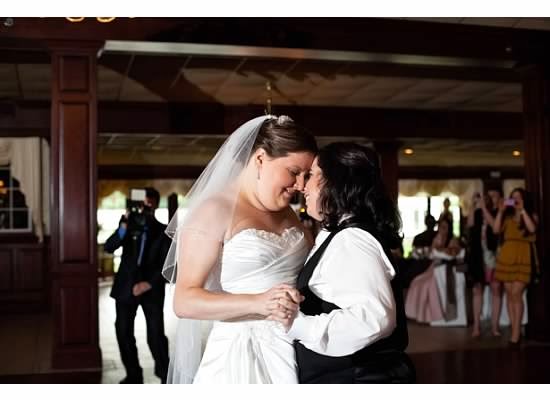
Tuesday, July 16, 2013

Tisha B'Av

Today is Tisha B'Av, a Jewish national day of mourning for the destruction of both temples. For strict observers, it involves not listening to music or celebrating or having fun for three weeks, fasting the first and last day (24 hours without food OR water), nine days of abstaining from meat, and more. For Reform Jews...well, I've recently learned that many say, "Tisha B'what??"

In trying to find my own path to making Tisha B'Av personally meaningful over the past few weeks, I was told by one person, "Reforms don't really do that," while others asked what the day is. One person at my synagogue sitting behind me in services last week said, "I only ever heard the name at Jewish camp as a kid, and didn't know what it was," while someone in Torah study said, "As a kid I always heard people say stay away from water, which was hard in summer, and I didn't understand why."

Well, this year Rabbi educated those in attendance, and it was so wonderful to see the level of curiosity, interest, and interaction among congregants around this topic. She offered explanation for why many Reform Jews are not so observant of this day, and engaged us in discussion around how we can make it meaningful to us so that it does not just go by completely ignored.

Friday evening, Rabbi's sermon was about the Haftarah portion which was relevant to Tisha B'Av, and she used that to get conversation going around it. In the summer, services have a smaller turnout and are held in another room (not in the sanctuary) where it is cooler. This means a more intimate and casual gathering, and it was so smart to utilize this forum to get people involved in the sermon. Rabbi explained that many Reforms moved away from observing Tisha B'Av because we don't agree with such intensive mourning around the destruction of the temples in a way that implies our wish to have them back. Reform Jews are very proud of the Diaspora and wouldn't necessarily wish for all Jews to be in Israel and at the temple. Reform Jews also enjoy the way Jewish spirituality currently manifests and would not wish to return to a time of priests and animal sacrifices. Thus, such severe mourning over the temples' destruction and the atmosphere of those times feels inauthentic.

However, the destruction of the temple is just one of many, many times throughout history in which Jews were persecuted, in which a group in power attempted to completely obliterate the Jewish people. Tisha B'Av provides an opportunity to mourn this persecution, the loss of Jewish lives, and the suppression of Jewish culture. It encourages us to be contemplative and to let ourselves FEEL the pain of this. It reminds us of our painful history so that we can increase our joy and appreciation the rest of the year and so that we don't forget where we have come from and what we have survived. It can even remind us of where persecution still exists, against us or against others.

How can I make that meaningful for me? How can I spend three weeks feeling this in a way that is meaningful and not emptily ritualistic?

I can tell you fasting didn't work for me! I tried the first day and was so miserable and cranky. I felt physically unwell which affected my job performance (which affects people's lives) and my interactions with those around me. So not only was it causing harm, but my resentment around how I was feeling certainly didn't aid me in mourning and contemplating.

I think next year I may observe similarly to how I used to observe Lent as a Catholic. I will not give up all opportunities for joy in the beautiful summer I am given, but I will give up something so that I feel and can stay sobered by its loss for that period of time. I can also continue to take on opportunities for staying mentally and emotionally engaged in the meaning of Tisha B'Av, which I did this year by attending Rabbi's beautiful Lamentations study and by attending a temple field trip to the little Holocaust Museum out on Long Island.

I'm finding my balance, and am grateful for the dialogue I can have with my peers and my rabbi to help me find the path of observance that is right for me.

Monday, July 15, 2013

The Defeat of DOMA and the Jewish Response

A few weeks ago, two days after my birthday, the Defense of Marriage Act which permitted federal discrimination against LGBT individuals, denying hundreds of rights, was repealed. For anyone emotionally invested in this decision and on the edges of their seats for months, they will always remember where they were when they heard that Wednesday morning.

There is much work still to be done. There are too many states where discrimination against same-sex individuals and couples is still legally sanctioned. But it is HUGE that we are now federally protected. This ensures safety for us in so many arenas that were previously denied. Disturbingly, soooo many people I know had not even heard of DOMA and thought the state legalization had solved everything.

At that Friday's Shabbat service, Rabbi worked this into her sermon. She spoke about that week's Torah portion, which just happened to be about four sisters who stood up to a law that would deny them their deceased father's inheritance since there were no sons. They didn't meekly plead, but they also didn't create a ruckus. They just said, "we should get this, and this is why." They defended their case. They were assertive and wanted justice. Moses appealed directly to God, who said that the sisters were right and the law should be changed.

Rabbi expounded on this to say that God WANTS us to challenge laws if they are unfair. (Oh look, a basis for Reform Judaism in the Torah!!) Laws were created for a certain purpose, with intentions to be protective and just, but if they ever become unjust as circumstances and times change, we have a right and a responsibility to amend them. This is much of what I love about Reform Judaism (along with, among other things, wanting people to keep ritual observance meaningful rather than just doing what is proscribed by religious law even when it is habitual and unmeaningful).

Rabbi related this to the ordination of women, and then in the end brought up DOMA. She said, "Some say same-sex relationships are wrong because of what is written in the Torah. I say God has been waiting for us to make it right."

This is not just unique to our amazing rabbi. In synagogues across the country, communities celebrated and rabbis addressed this in their sermons with joy and satisfaction. It wasn't just gay people celebrating, but Jews. For Jews, any gain in social justice is a communal gain.

Do you understand why I feel so in love and at home?

<3