In 2007 I joined Weight Watchers and lost 30 pounds. I had never dieted before, and my weight had just been steadily increasing throughout my life. At 23 years old and 185 pounds, my doctor warned me that I was pre-diabetic. My mother and my grandmother both developed diabetes, and this was a huge wake-up call to me. I never thought I ate that badly, and while I would have liked to be smaller, 185 didn't seem like the end of the world to me. But now I learned that my constant thirst that made it imperative to have a water bottle anytime I left the apartment, my frequent urination, and my sporadic lightheadedness/dizziness weren't normal. I also knew that I just didn't feel that great about myself, and that I wanted something to change.
At 155 pounds, I felt great. I wasn't thin or flat-stomached by any means, but I felt confident, happy, and even attractive, which I hadn't really felt since high school. I don't gain weight in my hips or butt; I get a potbelly, my upper body gets even broader while my lower body stays narrow, and my "chin" gets very big very quickly. My most self-conscious attributes are amplified when I gain weight, so the converse does wonders for how comfortable I feel in my own skin. I didn't need to look like a model. I didn't need a different, more voluptuous/feminine shape. I embraced the basis of who I was. Weighing 155 made me feel on top of the world. I might as well have been 125 for how happy I was.
I stopped going to meetings and eventually got lazy about tracking what I ate. I was in a new relationship and lost my focus. However, I had learned enough healthy habits that I was able to maintain it. I may have fluctuated some, hovering around 160 for a while, but seeing it go up would always help me check myself and I certainly never went back near 185.
After my partner left me suddenly and traumatically, I couldn't eat for a week. The only thing my body craved was fruit and dairy; anything else made me feel like I would throw up just looking at it. I recovered enough to resume normal eating, but not before dropping ten pounds in just over a week and weighing my lowest at 150. By the time I got to the anger stage, I took great pride in this, which I was now maintaining through healthy, well-rounded eating habits rather than trauma-induced undereating. I maintained it almost effortlessly, because it was the only thing I felt in control of. She may have turned my entire world upside down, and maybe everything else felt awful, but this, this felt good. This was something about me that I had daily control over that made me happy. I clung to that with everything I had.
My first official date with Nicole was a (clean, innocent) overnight trip to Northampton, MA. I remember feeling like we ate a ton of bad things while we were there, and I hadn't weighed myself in probably a month or so. I was feeling good, single and attractive enough, and I didn't want to lose control again. I went home after the trip and weighed myself: 148. I was absolutely elated. It was the best feeling in the world. I hadn't been in Weight Watchers for over a year, but I was still making good choices and had continued to lose on my own. My healthy weight range is 130-150, and this was the first time I saw myself go under 150. I was almost disappointed that I didn't get to goal while in Weight Watchers. My only rewards and praise were internal.
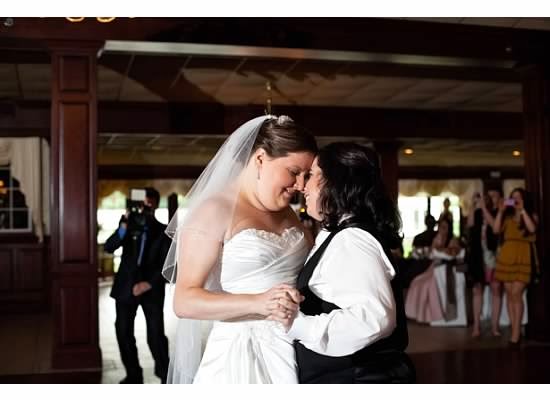
Since then, as my relationship developed with Nicole, I slowly gained much of my weight back. I really don't know how it happened. I can't pinpoint anything, and hindsight isn't helpful because it was so gradual. I don't know if we ate out a lot, or if I just felt comfortable and happy in life so I could let go of that One Thing that I'd been clinging to for contentment. I'm not sure. We lost some weight together for our engagement photos (maybe about 12 pounds) but then it came back again, and ironically we couldn't find the same motivation for our wedding. I spent a year and a half of my engagement talking about trying to lose weight by our wedding, and instead I buckled under my own pressure and sabotaged my success. Then when we didn't lose weight by our wedding (I was around 168 then), it was sort of like "screw it" right afterward. If my wedding couldn't motivate me, what could? I felt frustrated and disappointed in myself. I also felt a huge relief of pressure that I'd put on myself for well over a year, and I embraced the opportunity to not think about it so much for a while. Under these circumstances, I crept up to 175.
The breaking point was when we were packing for vacation two weeks ago. We brought out summer clothes to take to the beach, and almost nothing fit. I had a few shirts, but not a single pair of shorts. They weren't just tight--I couldn't even button them. I felt so ashamed, and also reminded of how unhappy I've been with my weight lately. How I feel awkward and self-conscious and avoid looking at myself in mirrors. If it was out of my control, maybe my feelings wouldn't be so intense. But I know I can do it, and that all it takes is a little bit of self-discipline. I hate feeling like I have no willpower.
The day we got back from vacation, I signed up for Weight Watchers online. It's only $19 per month, as opposed to the $40 it costs if you go to meetings. For that price I get what I really need right now, which is the points tracker. It's an app on my phone and makes it really easy to track everything I eat, no matter where I am. Nicole has been tracking informally alongside me; we have the same breakfast and pack identical snacks and lunches. We have both lost five pounds just since Sunday. It feels great, but I also feel impatient. I'm annoyed at how much weight I allowed to come back, and I know it's going to take a while to go back down. But I have to get there. I need to get back to at least 155, where I felt really secure in my own skin.
I feel an urgency to do this now. I've been playing around for too long. I want to re-create healthy eating habits that I can maintain throughout life and model for my children. I want my body to be healthy and as fertile as it can be. I want to feel good about myself before the insecurities I'll likely develop after childbirth. There will be enough body image issues to battle then, I'm sure. I don't need to add anything on top of that. I need to at least know I'm in the healthiest place that I can reasonably be before I add all those extra challenges. Posting it here is an an attempt to hold myself accountable.
wedding
Saturday, March 24, 2012

Tuesday, February 28, 2012
Medical Romance?
I used to wish with all my heart that we could spontaneously create life in the sanctuary of our own bed and each other's arms. I used to wish that we could have a passionate night where one of us whispers, "Let's just forget about protection tonight..." and the next morning excitedly freak out together, grinning as we wonder whether life has begun to form inside me. I used to wish we could say, "okay, let's start trying," and all that would mean is continuing our lives as usual, minus any contraceptive barriers.
At some point, without even realizing it, I let all that go. Babymaking became a medical process instead of a romantic or sexual process, and that was okay with me. It must have happened during the many months I've begun thinking seriously about conception...I've thought about it so much that it's become my norm. I often forget there are other easier/cheaper ways to get pregnant; I've been surprised more than once to find out someone "accidentally" got pregnant, whether it's a peer or a client. It's like I have to be reminded that that's even possible, that it didn't require extensive planning and financial hardship and time off work in order to happen.
It would be so easy to get caught up in self-pity or even resentment toward people for whom it seems so much easier and cheaper. It would be easy to feel bitter that we will have to pay over $500 every month for a vial of sperm and shipment from bank to clinic, when there are people who recklessly spill their free seed on a regular basis with disregard or even regret. But none of this seems relevant anymore. It's just not important. This is our process, and it has been in my mind this way for so long that I rarely stop to question it or compare it to others' processes. In fact, I probably view it more positively than, say, someone who has always thought or assumed they could conceive through sex and end up needing medical intervention. I would imagine there is some level of disappointment or frustration there that we won't experience because this has ALWAYS been the way it would be for us. It has always been our only option, never a last resort. For us, the disappointment/frustration would come in if we hit our insurance cap for fertility treatments and couldn't afford any more tries and had to give up the idea of pregnancy as a means to parenthood.
I like the idea of our little science experiment. I like the idea of giddily calling out sick when my ovulation test is positive and rushing to the doctor with Nicole. I like the idea of gripping her hand and smiling through my wincing while I'm inseminated. I even like the idea of sperm shopping! If we were medicalizing conception because of prior difficulties, maybe it would have a different feel. But we're going into it assuming health and fertility, and hoping that this will be a relatively quick process...and in that sense, I suppose we have much more in common with heterosexual couples than we ever thought.
Saturday, February 18, 2012
It Takes a Village
There's a point in every service where the rabbi invites each person to take a moment for their private meditation and prayer. I've been struggling with a staffing issue at work that I can't go into detail about since I made the decision to keep this blog open and public. Suffice it to say, I have been very angry, irritated, and stressed for many months now. The issue is finally being resolved, but came to a head this week and led me to feeling very upset and breaking down in tears several times. During this moment of private prayer last night, it somehow came over me to pray for this person. I don't mean in a condescending "help them be a better person" way. It was a prayer for this person's happiness, asking that they can find peace and fulfillment, and that they have supports in their lives that they can lean on and be strengthened by. I was able to let go of my anger and frustration and annoyance and genuinely hope for this person's overall emotional and psychological well-being, and a smooth road throughout life.
Afterward, I felt so calm. I felt tension drain out of me that has been there for months. And I developed a clearer perspective on the whole situation. It reminded me of something my sister quoted from her priest one time: "Prayer isn't for God; God already knows your wants and needs. Prayer is for you, and for strengthening your relationship with God." That made a big impact on me since I've always taken issue with the idea that praying for someone makes them better, which implies that someone NOT being prayed for would just be neglected by God. I could never embrace that, which made it difficult for me to pray because I wasn't sure of the point. This one shift in the idea of what prayer means helped me more than I can say. And yesterday I got to really feel its impact. Praying for this person isn't going to change their attitude or life course; that's up to the individual. But it changed ME, which will affect how I interact with this person which WILL make a difference both to me and that person.
The strangest part was that the sermon for last night was about all the laws set forth in the Torah, and Reform Jews' struggle with many of them. Rabbi said that Reforms have a lot of ambivalence so they don't necessarily keep kosher, etc. Rabbi said that this doesn't mean we should just pick and choose what we follow from the Torah because we DO believe that these laws came from God, but more that we should understand and take from them the overall implications for how we are supposed to live our lives, the biggest one being to be empathetic and compassionate. She quoted verses about how if you see that your neighbor's ass has fallen, you must still help him pick the ass up, or if his ass wanders to your yard, you need to return it. "Love your neighbor" was the overall message. So we may disregard laws about how to treat your slaves because it's not relevant within the context of our lives, but we can take and live by the inherent message in how we should treat other people. It was a very odd feeling because I felt like it spoke to what I had prayed about just moments before.
How does this relate to babymaking for the purposes of this blog? Nicole and I had a great conversation afterward about all this, and it made me excited to be able to have this type of discussion with my kids. I was reminded last night about how I can strive to be not only the kind of person I want to be, but the kind that I tend to think I am even as I act differently. It makes me more aware of myself.
Is religion required to be able to improve yourself and teach your children how to lead moral lives? I really don't believe so. But for me, I benefit from the guidance it offers, the regular teachings and conversation, the constant self-challenging and self-reflection. I think of myself as a compassionate and empathetic person; my entire career is based on this self-concept. And I am in many ways, I'm not discounting that. But here was a way in which I wasn't living that way and may not otherwise have realized it. Even if I was an atheist, I think I would want to belong to one of those secular humanist organizations that still arrange gatherings and activities around how to be a better person and live more like the person you want to be. And I certainly would want to raise my children in this kind of environment. I try to be a basically good person, and I would hope that modeling that for my children would help them be good people too. But I still fall short of where I want to be, and I need help raising them. I do. I'm not an expert, in anything, and I want the support of positive, like-minded people and an organization I believe in. I want their help to better myself and therefore be a better role model for my children, and I want their help explaining and teaching. I can humble myself to admit that we as parents are not going to be enough to raise our children the way we want to, to provide them with a well-rounded experience as people.
I'm so glad we've found our family's home.
Afterward, I felt so calm. I felt tension drain out of me that has been there for months. And I developed a clearer perspective on the whole situation. It reminded me of something my sister quoted from her priest one time: "Prayer isn't for God; God already knows your wants and needs. Prayer is for you, and for strengthening your relationship with God." That made a big impact on me since I've always taken issue with the idea that praying for someone makes them better, which implies that someone NOT being prayed for would just be neglected by God. I could never embrace that, which made it difficult for me to pray because I wasn't sure of the point. This one shift in the idea of what prayer means helped me more than I can say. And yesterday I got to really feel its impact. Praying for this person isn't going to change their attitude or life course; that's up to the individual. But it changed ME, which will affect how I interact with this person which WILL make a difference both to me and that person.
The strangest part was that the sermon for last night was about all the laws set forth in the Torah, and Reform Jews' struggle with many of them. Rabbi said that Reforms have a lot of ambivalence so they don't necessarily keep kosher, etc. Rabbi said that this doesn't mean we should just pick and choose what we follow from the Torah because we DO believe that these laws came from God, but more that we should understand and take from them the overall implications for how we are supposed to live our lives, the biggest one being to be empathetic and compassionate. She quoted verses about how if you see that your neighbor's ass has fallen, you must still help him pick the ass up, or if his ass wanders to your yard, you need to return it. "Love your neighbor" was the overall message. So we may disregard laws about how to treat your slaves because it's not relevant within the context of our lives, but we can take and live by the inherent message in how we should treat other people. It was a very odd feeling because I felt like it spoke to what I had prayed about just moments before.
How does this relate to babymaking for the purposes of this blog? Nicole and I had a great conversation afterward about all this, and it made me excited to be able to have this type of discussion with my kids. I was reminded last night about how I can strive to be not only the kind of person I want to be, but the kind that I tend to think I am even as I act differently. It makes me more aware of myself.
Is religion required to be able to improve yourself and teach your children how to lead moral lives? I really don't believe so. But for me, I benefit from the guidance it offers, the regular teachings and conversation, the constant self-challenging and self-reflection. I think of myself as a compassionate and empathetic person; my entire career is based on this self-concept. And I am in many ways, I'm not discounting that. But here was a way in which I wasn't living that way and may not otherwise have realized it. Even if I was an atheist, I think I would want to belong to one of those secular humanist organizations that still arrange gatherings and activities around how to be a better person and live more like the person you want to be. And I certainly would want to raise my children in this kind of environment. I try to be a basically good person, and I would hope that modeling that for my children would help them be good people too. But I still fall short of where I want to be, and I need help raising them. I do. I'm not an expert, in anything, and I want the support of positive, like-minded people and an organization I believe in. I want their help to better myself and therefore be a better role model for my children, and I want their help explaining and teaching. I can humble myself to admit that we as parents are not going to be enough to raise our children the way we want to, to provide them with a well-rounded experience as people.
I'm so glad we've found our family's home.
Wednesday, February 15, 2012
Journey to Judaism
After going to services at Temple Tikvah for five weeks, we finally made an appointment to sit down with the rabbi and talk about where we are going with all this. It was a little awkward but so exciting because it felt like we were moving after almost a year of just talking about it.
Rabbi asked us about where we were coming from and where we hope to be heading. I explained that Nicole was raised with a little bit of the Jewish culture, mostly in the form of holiday traditions, but wasn't raised with religion. She has been uncomfortably seeking it for years, and it took being with someone who felt more sure of religion, more in practice, to help nudge her out of her comfort zone. Nicole knows how hard it is to scramble for religious roots after being raised with nothing, and she doesn't want our children to have the same struggle. Nicole doesn't even know how to pray, and she admires how at ease I am with it; she wants our children to be raised with the same comfort level I have from my own religious upbringing.
I then explained my own situation to Rabbi. I had been looking for my right fit since about age 19 or 20. It started with not being able to believe that Communion was the Body and Blood of Christ, which made me feel unable to identify as Catholic. Then I dabbled in other Christian denominations, looking for something that felt right to me, until I came to the realization that there were many basic Christian principles I didn't embrace. From there, I vacillated between identifying as agnostic and "just spiritual," not really ever knowing what that meant for me but being okay with the ambiguity. Upon meeting Nicole and developing a curiosity about her ancestry and traditions, I began to realize that Judaism was everything I COULD believe in...it had the basics that I grew up with, without the Christian additions that I wasn't comfortable with. Once I learned about Reform Judaism, which allowed for questioning and understanding things within their historical contexts and individual interpretations, I knew I'd found the right faith for me. Nicole's self-conscious desire for religiosity and spirituality fit well with my own new confident self-awareness, and there our journey began.
I told Rabbi that we have been talking about it for almost a year but had chosen not to move forward until after our wedding, which at that point was less than six months away. We knew one major change coming up in our lives was enough for now, and we didn't want to rush ourselves. Rabbi asked how that impacted our wedding, and I told her that we had accepted that our wedding would not be Jewish because it was too last-minute, and we didn't want to rush conversion for the sake of our wedding, that we want the process to be authentic. Rabbi said she appreciated that, and said the custom is that when someone asks to become a Jew, the rabbi refuses them three times. That's their way of making sure the person isn't going into it lightly and is committed. (That said, she didn't refuse us, so maybe Reforms don't have to...they just explain the significance of the custom. I think our almost year-long journey in just the contemplation phase showed our seriousness.)
Rabbi said the next step would be for us to take a course of study in Judaism together. She said she knows we work over an hour apart from each other, but that it's really something we should do together rather than going to separate classes at separate places. I agreed wholeheartedly...I love the idea of homework together, and talking about what we learned. She said she will look for somewhere convenient for us that suits our schedule and let us know.
During this process, she would be our sponsoring rabbi and would meet with us once a month in the beginning, and more frequently toward the end. She said, "Sometimes I'll meet with both of you to talk about your reactions to what you're learning, and sometimes I'll meet just with Rachel." This sort of jolted me because it reminded me that Nicole doesn't really need to convert. We've known this all along but she has said she wants to go through the whole process because she knows very little about Judaism. Because of this, I'd let myself get really comfortable with the idea that it's both of us, but it's really not. It's like she's just auditing a class that I'm required to have to graduate.
After the course of study, I would have to do a mikveh, which is a full immersion into flowing water. Christians took the tradition of Baptism from this. (I always find the Judeo-Christian links fascinating.) It's a purity ritual that is also part of the conversion process. There are mikvehs all over Long Island that are set up like spas. You have to be completely naked because it symbolizes rebirth. In stricter forms of Judaism, clergy have to be in the room witnessing this, but fortunately most Reforms, including our rabbi, are satisfied with standing guard outside and hearing the splash of immersion and hearing you recite the associated prayer. The thought of this made me absolutely ecstatic, even as I knew it must be making Nicole's skin crawl.
After this, you have to meet with three learned Jews--our sponsoring rabbi and two other people. They consider themselves "gatekeepers" and basically just want to know that you understand the commitment you're taking on and that you're coming to Judaism of your own free will. Then there is a public ceremony.
Nicole just sat back and didn't talk much in this meeting, but I knew each one of these steps was freaking her out inside. She'd love to take a class and then a test and let that be that--naked bathing, being quizzed, and having a public ceremony would be enough to make her embrace atheism! So I said to Rabbi, "Just to clarify, since Nicole is Jewish by her mother, she wouldn't have to go through all these other steps?" Rabbi said, "No, she can choose what fits her. If she just wants to go through the course of study with you, that's absolutely fine. If she wants to go through the other steps as a recommitment to Judaism, she can."
As much as it scared me at first to be reminded of our separation, that she isn't really converting, it also became really exciting to me. I'm so enmeshed in other systems--my marriage, my family, my professional environment--that I don't really have anything that's completely my own. I don't even have a hobby that I indulge in independently. Our spiritual journey will be both shared and private, but conversion is my own, and I love that.
Rabbi asked us about where we were coming from and where we hope to be heading. I explained that Nicole was raised with a little bit of the Jewish culture, mostly in the form of holiday traditions, but wasn't raised with religion. She has been uncomfortably seeking it for years, and it took being with someone who felt more sure of religion, more in practice, to help nudge her out of her comfort zone. Nicole knows how hard it is to scramble for religious roots after being raised with nothing, and she doesn't want our children to have the same struggle. Nicole doesn't even know how to pray, and she admires how at ease I am with it; she wants our children to be raised with the same comfort level I have from my own religious upbringing.
I then explained my own situation to Rabbi. I had been looking for my right fit since about age 19 or 20. It started with not being able to believe that Communion was the Body and Blood of Christ, which made me feel unable to identify as Catholic. Then I dabbled in other Christian denominations, looking for something that felt right to me, until I came to the realization that there were many basic Christian principles I didn't embrace. From there, I vacillated between identifying as agnostic and "just spiritual," not really ever knowing what that meant for me but being okay with the ambiguity. Upon meeting Nicole and developing a curiosity about her ancestry and traditions, I began to realize that Judaism was everything I COULD believe in...it had the basics that I grew up with, without the Christian additions that I wasn't comfortable with. Once I learned about Reform Judaism, which allowed for questioning and understanding things within their historical contexts and individual interpretations, I knew I'd found the right faith for me. Nicole's self-conscious desire for religiosity and spirituality fit well with my own new confident self-awareness, and there our journey began.
I told Rabbi that we have been talking about it for almost a year but had chosen not to move forward until after our wedding, which at that point was less than six months away. We knew one major change coming up in our lives was enough for now, and we didn't want to rush ourselves. Rabbi asked how that impacted our wedding, and I told her that we had accepted that our wedding would not be Jewish because it was too last-minute, and we didn't want to rush conversion for the sake of our wedding, that we want the process to be authentic. Rabbi said she appreciated that, and said the custom is that when someone asks to become a Jew, the rabbi refuses them three times. That's their way of making sure the person isn't going into it lightly and is committed. (That said, she didn't refuse us, so maybe Reforms don't have to...they just explain the significance of the custom. I think our almost year-long journey in just the contemplation phase showed our seriousness.)
Rabbi said the next step would be for us to take a course of study in Judaism together. She said she knows we work over an hour apart from each other, but that it's really something we should do together rather than going to separate classes at separate places. I agreed wholeheartedly...I love the idea of homework together, and talking about what we learned. She said she will look for somewhere convenient for us that suits our schedule and let us know.
During this process, she would be our sponsoring rabbi and would meet with us once a month in the beginning, and more frequently toward the end. She said, "Sometimes I'll meet with both of you to talk about your reactions to what you're learning, and sometimes I'll meet just with Rachel." This sort of jolted me because it reminded me that Nicole doesn't really need to convert. We've known this all along but she has said she wants to go through the whole process because she knows very little about Judaism. Because of this, I'd let myself get really comfortable with the idea that it's both of us, but it's really not. It's like she's just auditing a class that I'm required to have to graduate.
After the course of study, I would have to do a mikveh, which is a full immersion into flowing water. Christians took the tradition of Baptism from this. (I always find the Judeo-Christian links fascinating.) It's a purity ritual that is also part of the conversion process. There are mikvehs all over Long Island that are set up like spas. You have to be completely naked because it symbolizes rebirth. In stricter forms of Judaism, clergy have to be in the room witnessing this, but fortunately most Reforms, including our rabbi, are satisfied with standing guard outside and hearing the splash of immersion and hearing you recite the associated prayer. The thought of this made me absolutely ecstatic, even as I knew it must be making Nicole's skin crawl.
After this, you have to meet with three learned Jews--our sponsoring rabbi and two other people. They consider themselves "gatekeepers" and basically just want to know that you understand the commitment you're taking on and that you're coming to Judaism of your own free will. Then there is a public ceremony.
Nicole just sat back and didn't talk much in this meeting, but I knew each one of these steps was freaking her out inside. She'd love to take a class and then a test and let that be that--naked bathing, being quizzed, and having a public ceremony would be enough to make her embrace atheism! So I said to Rabbi, "Just to clarify, since Nicole is Jewish by her mother, she wouldn't have to go through all these other steps?" Rabbi said, "No, she can choose what fits her. If she just wants to go through the course of study with you, that's absolutely fine. If she wants to go through the other steps as a recommitment to Judaism, she can."
As much as it scared me at first to be reminded of our separation, that she isn't really converting, it also became really exciting to me. I'm so enmeshed in other systems--my marriage, my family, my professional environment--that I don't really have anything that's completely my own. I don't even have a hobby that I indulge in independently. Our spiritual journey will be both shared and private, but conversion is my own, and I love that.
Friday, February 10, 2012
High five, reproductive organs!
I OVULATED!!! And on the exact day that my fertility app predicted!
I bought 50 ovulation testing strips on Amazon for $9. Because they were so cheap, I decided to start using them the first day I was fertile, two days ago. (Because sperm can live in you for days, you're fertile even before you ovulate, since the sperm will still be hanging around waiting for the release.) I wanted to have a comparison. My first test had a very, very faint pink line next to the strong pink control line. Then yesterday, it was slightly darker, but still faint enough to be negative. (The package is very clear that a faint line is negative.) My guess, then, was that maybe my body was beginning to produce whatever hormone it tests for, which made me hopeful that on my actual ovulation day, I would get a positive test. And indeed I did!
The first day, Nicole sort of rolled her eyes at me teasingly but grinned and asked to see it. She was interested in seeing the strip both before and after, and asked me how it worked. She asked how it could work if I am only supposed to dip the tip in my urine. I said, "It's like in high school when you used those litmus test thingies in the creek to test water quality. You only dipped the tip in, and it spread up the strip." She said, "Um, high schools in Long Island don't have creeks to take science students to..." Here we digressed into an unexpected and fun conversation about the differences in our educations, ha!
Nicole was interested the second day, too. I did the first two tests at night. Then today, I wanted to do it before work. Nicole asked why, and I said that I'd known the other two tests most likely would be negative so it didn't matter, but the day of my predicted ovulation, I wanted to have the opportunity to test both in the morning and at night if needed. This just meant it was more rushed, and I just had a faintly darker line that I wasn't sure about by the time Nicole left for work. I left it sitting out (you're supposed to wait five minutes before reading it, but the other two tests hadn't done anything else after the first minute) and then happened by it a little later and noticed that it was definitively darker. I took a picture of it and sent it to Nicole, and she actually had an excited response ("omg awesome") instead of a teasing or disinterested one. It was pretty amazing.

Doesn't get much clearer than that, does it?
My excitement felt a little silly...it's not a pregnancy test, after all. And really the expectation, the "norm", should be regular ovulation. It should be something you can take for granted, something you can just assume unless something seems off about your cycle. But I have never assumed this for myself, and it's extremely important that it be predictable because insemination is going to be expensive for us. It's not like we can have sex every day for a month and hope for the best. That's not to minimize the difficulties and expenses many opposite-sex couples can also experience with conception...but they have a chance from the beginning to at least try for free, or increase their odds, and we know we will have to pay for every single attempt. So if I can nail down the exact day and at least only pay for one attempt per month, I'll be a lot better off than if I were completely unpredictable.
This leads me to my next topic: my feelings about conception being a medical experience from the very beginning rather than a romantic one. Another post for another day. For today, I'm ecstatic to know that an egg is hanging around waiting to be fertilized. (Sorry, little egg, it's not your time.)
I bought 50 ovulation testing strips on Amazon for $9. Because they were so cheap, I decided to start using them the first day I was fertile, two days ago. (Because sperm can live in you for days, you're fertile even before you ovulate, since the sperm will still be hanging around waiting for the release.) I wanted to have a comparison. My first test had a very, very faint pink line next to the strong pink control line. Then yesterday, it was slightly darker, but still faint enough to be negative. (The package is very clear that a faint line is negative.) My guess, then, was that maybe my body was beginning to produce whatever hormone it tests for, which made me hopeful that on my actual ovulation day, I would get a positive test. And indeed I did!
The first day, Nicole sort of rolled her eyes at me teasingly but grinned and asked to see it. She was interested in seeing the strip both before and after, and asked me how it worked. She asked how it could work if I am only supposed to dip the tip in my urine. I said, "It's like in high school when you used those litmus test thingies in the creek to test water quality. You only dipped the tip in, and it spread up the strip." She said, "Um, high schools in Long Island don't have creeks to take science students to..." Here we digressed into an unexpected and fun conversation about the differences in our educations, ha!
Nicole was interested the second day, too. I did the first two tests at night. Then today, I wanted to do it before work. Nicole asked why, and I said that I'd known the other two tests most likely would be negative so it didn't matter, but the day of my predicted ovulation, I wanted to have the opportunity to test both in the morning and at night if needed. This just meant it was more rushed, and I just had a faintly darker line that I wasn't sure about by the time Nicole left for work. I left it sitting out (you're supposed to wait five minutes before reading it, but the other two tests hadn't done anything else after the first minute) and then happened by it a little later and noticed that it was definitively darker. I took a picture of it and sent it to Nicole, and she actually had an excited response ("omg awesome") instead of a teasing or disinterested one. It was pretty amazing.

Doesn't get much clearer than that, does it?
My excitement felt a little silly...it's not a pregnancy test, after all. And really the expectation, the "norm", should be regular ovulation. It should be something you can take for granted, something you can just assume unless something seems off about your cycle. But I have never assumed this for myself, and it's extremely important that it be predictable because insemination is going to be expensive for us. It's not like we can have sex every day for a month and hope for the best. That's not to minimize the difficulties and expenses many opposite-sex couples can also experience with conception...but they have a chance from the beginning to at least try for free, or increase their odds, and we know we will have to pay for every single attempt. So if I can nail down the exact day and at least only pay for one attempt per month, I'll be a lot better off than if I were completely unpredictable.
This leads me to my next topic: my feelings about conception being a medical experience from the very beginning rather than a romantic one. Another post for another day. For today, I'm ecstatic to know that an egg is hanging around waiting to be fertilized. (Sorry, little egg, it's not your time.)
Sunday, January 29, 2012
Heeeeeeere, little eggy!
Last month I downloaded a fertility tracking application on my phone. I had decided that if I was antsy to be active about this but couldn't really do much a year in advance, that I could at least start tracking my cycle. At first I marked a small pocket calendar when I started my period on 12/27, and then I thought to see if there was something for my phone I could use instead, and there was. It's quite useful, because it tells me exactly which day I should be ovulating. This is based on a 28-day cycle, but after I marked the beginning of my next period on 1/25, it recalculated based on my 30-day cycle. Now the ovulation predictor should be more accurate this month. Although strangely, I had all the signs of ovulation one day last month and checked my app out of curiosity, and yep, I was "scheduled" to ovulate that very day, and that was based on a 28-day cycle.
I've ordered ovulation strips (50 for under $10!) so I can test this month and see if I do ovulate that day. If I don't, but I do on a different day, I can enter that into my app to improve accuracy too. But honestly right now I'm just antsy to know whether I ovulate at all. I don't care when it happens; I just want to know that an egg is released every month! That will help me feel hopeful that it won't take us forever and our life's savings to get pregnant. (I'm very pro-adoption, and I don't think I could justify sinking thousands into trying to get pregnant if it's just not happening.)
I'm very excited that I have a real idea of how long my cycle is and when I may ovulate. I'll be even more excited if and when I can confirm that I do!
I've ordered ovulation strips (50 for under $10!) so I can test this month and see if I do ovulate that day. If I don't, but I do on a different day, I can enter that into my app to improve accuracy too. But honestly right now I'm just antsy to know whether I ovulate at all. I don't care when it happens; I just want to know that an egg is released every month! That will help me feel hopeful that it won't take us forever and our life's savings to get pregnant. (I'm very pro-adoption, and I don't think I could justify sinking thousands into trying to get pregnant if it's just not happening.)
I'm very excited that I have a real idea of how long my cycle is and when I may ovulate. I'll be even more excited if and when I can confirm that I do!
Tuesday, January 24, 2012
"So who will be the 'real' mother?"
It was pretty easy for Nicole and me to decide who would carry our child. Our reasons are threefold:
1. I desperately want to be pregnant. Nicole desperately wants to avoid it.
I have ached for this my whole life. For the few years that I thought I didn't want to have children, I struggled with and grieved the fact that I would never get to experience pregnancy. Nicole, on the other hand, had sort of gritted her teeth and accepted that she may have to endure such torture in order to create a family. She was quite relieved when she met someone who was not only willing to be pregnant both times, but eager and excited to do so. This is not something she can relate to. Ironically, we both feel extremely grateful to the other for our stance on this!
2. I have a very regular cycle and am likely (knock on wood) quite fertile. Nicole has PCOS and a very irregular cycle.
This doesn't mean Nicole isn't fertile or couldn't get pregnant, but it would likely take much longer and become quite costly. We have to pay for our sperm each time, and we have to take off of work every time we want to try to conceive.There's also a cap on how much our insurance will cover. If Nicole decides suddenly that it's important to her to become pregnant, then we will do our best to accommodate this. But it certainly helps to utilize the partner with fewer barriers to pregnancy, since it's going to take time and money to make this happen.
3. I am a calm, mellow person who takes things in stride and relishes everything nature hands me. Nicole is a high-strung hypochondriac with a propensity for anxiety attacks and racing thoughts.
I even love getting my period. I don't exactly dance around in the forest like a little hippie nymph, but I DO get a sense of peace and pleasure from getting my period. For some reason (and yes, I acknowledge its oddness), it makes me feel connected to things, in touch with my body and life and the universe. I also have an obsession with the moon (Nicole frequently has to snap me back to attention when we're out because I get lost in gazing at it) so maybe I have some affinity for things that are cyclical. I just know it makes me feel feminine and earthy and harmonious and connected. Am I a little strange? Sure. But you can imagine how I might perceive the experience of pregnancy and even labor.
Nicole, on the other hand, has little to no tolerance for change of any kind, even change of the natural and cyclical variety. She hates feeling out of control of her own body and well-being. Change makes her feel unsafe, insecure, panicky. Exactly what excites me about it immobilizes her. Who knows, maybe pregnancy would be the solution! There's nothing like having something growing quickly inside you, depending on you for its very sustenance, to shake you up about how little control you have over anything. But for now, the idea is terrifying, unappealing, and even disturbing to her. It will be hard enough to keep her in check about MY pregnancy experience, as I'm sure she will be quite anxious all along the way.
Nicole has had two primary struggles with the idea of my carrying both children. First, she worries that she may someday regret not having the experience of pregnancy. It's hard for her to imagine now because the idea is so distasteful to her, but it's not a choice that will be available to her forever. She has a limited time to change her mind, and that pressure makes her second-guess herself and fear that she will have regrets when it's too late.
The second issue is that she has to grieve the idea of having a biological connection to her own child. As someone who works in foster care and adoption, I am a major proponent of family being about more than blood. However, it's easy to say that as the one who will have a genetic tie to my children. I empathize with Nicole completely on this, because I can only imagine everything she would be giving up.
As much as we will try to choose a sperm donor with her physical characteristics, the children are still more likely to look like me. I've read that "chosen" families often have outsiders unknowingly comment on shared characteristics. It seems that if people don't know up front, they tend to see traits in common that aren't necessarily really there. Further, it seems that certain things are learned--expressions, mannerisms, etc.--and that these things create resemblance despite having no genetic connection. This comforts me some, but I also know it's different the second people realize there are two mothers and quickly realize which one is biologically related. I have seen many two-moms-and-a-baby photos and blogs where I have no idea which mother gave birth, but will that make it sting less when someone unwittingly says, "Oh, she has your eyes!" before awkwardly realizing how this might feel for the other parent?
My mother-in-law recently offered to pay for IVF in order to have an embryo with Nicole's egg planted in me. Babymaking is an intensely personal decision and we had not asked for advice or opinions, so it felt very uncomfortable for me. I have told Nicole before that I have no issue with undergoing IVF if this is something she feels is important to her. However, it's not an easy process. Nicole would have to pump herself full of hormones with daily shots in her rear and crazy side effects, and then we would both have to undergo pretty invasive procedures. As a last-ditch effort to become pregnant, that becomes a much more desirable option for someone. But if simple insemination works for us, do we really want to put her body through all that? How much is a genetic connection worth?
What I really struggled with was why her mother wants this so badly that she would offer to pay. I admit that I took this more personally than I should have, but I couldn't help but ruminate over why this meant so much to her. It's not like Nicole expressed a strong desire to have a biological child while despising the idea of pregnancy and then her mother came up with this idea. It was completely unsolicited. This pokes at our insecurity that Nicole's family could look at our children as less theirs because they don't have a blood connection. I don't really think this would be the case if both children came from me, but if one comes from Nicole, I truly can't help but wonder if that child would be given preference, or seen as the "real" grandchild. That in itself was enough for Nicole to be more insistent than ever that I carry both so that there is no difference.
My mother-in-law HAS mentioned in the past that she is afraid that she would lose access to her grandchildren if we were ever to have a nasty divorce. I attempted to reassure her by letting her know that (1) I have no history of spiteful or vengeful behavior in breakups, and in fact have been quite a doormat in the past even when greatly wronged, (2) we plan on going through every single legal process available to ensure Nicole has every right to our children that I do, which would continue even in the case of divorce, and (3) working in the field that I do, I of all people know how cutting off supports affects children, and who you are really punishing in such a situation. (I didn't bother to speak about number four, which is that we will never divorce, because that is ineffective in addressing her actual concern.)
If we were each to have a child from our own individual embryos, and I whisked "my" child off with me in the event of a split, would the agony of losing one grandchild be eased because you have another? If you have two children, does the tragic death of one hurt less if you have a second? Can a child serve as a "backup" to another child? This line of thinking disturbs me. The idea of having one biological child as insurance just plays into the idea that one would "really" be mine and one would "really" be Nicole's, instead of us being a united family who are all equally connected and invested in one another.
I am glad my mother-in-law felt she could voice this because I know she was afraid I would be offended at the implication. But I am all too aware of the complexities of this situation, and I feel awkwardly self-conscious and guilty about the vulnerability of the non-biological family. There is nothing so frightening as feeling like you have a tenuous hold on someone who is the most important person in the world to you. I acknowledge that this fear is normal, and that my parents would be feeling it if it were the other way around. I am trying to take the offer to pay for IVF with a little less defensiveness and a little more understanding about how vulnerable her family feels in this situation. And I can say that her highlighting our insecurities led to amazing conversation between Nicole and me that has us more closely bonded than ever.
1. I desperately want to be pregnant. Nicole desperately wants to avoid it.
I have ached for this my whole life. For the few years that I thought I didn't want to have children, I struggled with and grieved the fact that I would never get to experience pregnancy. Nicole, on the other hand, had sort of gritted her teeth and accepted that she may have to endure such torture in order to create a family. She was quite relieved when she met someone who was not only willing to be pregnant both times, but eager and excited to do so. This is not something she can relate to. Ironically, we both feel extremely grateful to the other for our stance on this!
2. I have a very regular cycle and am likely (knock on wood) quite fertile. Nicole has PCOS and a very irregular cycle.
This doesn't mean Nicole isn't fertile or couldn't get pregnant, but it would likely take much longer and become quite costly. We have to pay for our sperm each time, and we have to take off of work every time we want to try to conceive.There's also a cap on how much our insurance will cover. If Nicole decides suddenly that it's important to her to become pregnant, then we will do our best to accommodate this. But it certainly helps to utilize the partner with fewer barriers to pregnancy, since it's going to take time and money to make this happen.
3. I am a calm, mellow person who takes things in stride and relishes everything nature hands me. Nicole is a high-strung hypochondriac with a propensity for anxiety attacks and racing thoughts.
I even love getting my period. I don't exactly dance around in the forest like a little hippie nymph, but I DO get a sense of peace and pleasure from getting my period. For some reason (and yes, I acknowledge its oddness), it makes me feel connected to things, in touch with my body and life and the universe. I also have an obsession with the moon (Nicole frequently has to snap me back to attention when we're out because I get lost in gazing at it) so maybe I have some affinity for things that are cyclical. I just know it makes me feel feminine and earthy and harmonious and connected. Am I a little strange? Sure. But you can imagine how I might perceive the experience of pregnancy and even labor.
Nicole, on the other hand, has little to no tolerance for change of any kind, even change of the natural and cyclical variety. She hates feeling out of control of her own body and well-being. Change makes her feel unsafe, insecure, panicky. Exactly what excites me about it immobilizes her. Who knows, maybe pregnancy would be the solution! There's nothing like having something growing quickly inside you, depending on you for its very sustenance, to shake you up about how little control you have over anything. But for now, the idea is terrifying, unappealing, and even disturbing to her. It will be hard enough to keep her in check about MY pregnancy experience, as I'm sure she will be quite anxious all along the way.
Nicole has had two primary struggles with the idea of my carrying both children. First, she worries that she may someday regret not having the experience of pregnancy. It's hard for her to imagine now because the idea is so distasteful to her, but it's not a choice that will be available to her forever. She has a limited time to change her mind, and that pressure makes her second-guess herself and fear that she will have regrets when it's too late.
The second issue is that she has to grieve the idea of having a biological connection to her own child. As someone who works in foster care and adoption, I am a major proponent of family being about more than blood. However, it's easy to say that as the one who will have a genetic tie to my children. I empathize with Nicole completely on this, because I can only imagine everything she would be giving up.
As much as we will try to choose a sperm donor with her physical characteristics, the children are still more likely to look like me. I've read that "chosen" families often have outsiders unknowingly comment on shared characteristics. It seems that if people don't know up front, they tend to see traits in common that aren't necessarily really there. Further, it seems that certain things are learned--expressions, mannerisms, etc.--and that these things create resemblance despite having no genetic connection. This comforts me some, but I also know it's different the second people realize there are two mothers and quickly realize which one is biologically related. I have seen many two-moms-and-a-baby photos and blogs where I have no idea which mother gave birth, but will that make it sting less when someone unwittingly says, "Oh, she has your eyes!" before awkwardly realizing how this might feel for the other parent?
My mother-in-law recently offered to pay for IVF in order to have an embryo with Nicole's egg planted in me. Babymaking is an intensely personal decision and we had not asked for advice or opinions, so it felt very uncomfortable for me. I have told Nicole before that I have no issue with undergoing IVF if this is something she feels is important to her. However, it's not an easy process. Nicole would have to pump herself full of hormones with daily shots in her rear and crazy side effects, and then we would both have to undergo pretty invasive procedures. As a last-ditch effort to become pregnant, that becomes a much more desirable option for someone. But if simple insemination works for us, do we really want to put her body through all that? How much is a genetic connection worth?
What I really struggled with was why her mother wants this so badly that she would offer to pay. I admit that I took this more personally than I should have, but I couldn't help but ruminate over why this meant so much to her. It's not like Nicole expressed a strong desire to have a biological child while despising the idea of pregnancy and then her mother came up with this idea. It was completely unsolicited. This pokes at our insecurity that Nicole's family could look at our children as less theirs because they don't have a blood connection. I don't really think this would be the case if both children came from me, but if one comes from Nicole, I truly can't help but wonder if that child would be given preference, or seen as the "real" grandchild. That in itself was enough for Nicole to be more insistent than ever that I carry both so that there is no difference.
My mother-in-law HAS mentioned in the past that she is afraid that she would lose access to her grandchildren if we were ever to have a nasty divorce. I attempted to reassure her by letting her know that (1) I have no history of spiteful or vengeful behavior in breakups, and in fact have been quite a doormat in the past even when greatly wronged, (2) we plan on going through every single legal process available to ensure Nicole has every right to our children that I do, which would continue even in the case of divorce, and (3) working in the field that I do, I of all people know how cutting off supports affects children, and who you are really punishing in such a situation. (I didn't bother to speak about number four, which is that we will never divorce, because that is ineffective in addressing her actual concern.)
If we were each to have a child from our own individual embryos, and I whisked "my" child off with me in the event of a split, would the agony of losing one grandchild be eased because you have another? If you have two children, does the tragic death of one hurt less if you have a second? Can a child serve as a "backup" to another child? This line of thinking disturbs me. The idea of having one biological child as insurance just plays into the idea that one would "really" be mine and one would "really" be Nicole's, instead of us being a united family who are all equally connected and invested in one another.
I am glad my mother-in-law felt she could voice this because I know she was afraid I would be offended at the implication. But I am all too aware of the complexities of this situation, and I feel awkwardly self-conscious and guilty about the vulnerability of the non-biological family. There is nothing so frightening as feeling like you have a tenuous hold on someone who is the most important person in the world to you. I acknowledge that this fear is normal, and that my parents would be feeling it if it were the other way around. I am trying to take the offer to pay for IVF with a little less defensiveness and a little more understanding about how vulnerable her family feels in this situation. And I can say that her highlighting our insecurities led to amazing conversation between Nicole and me that has us more closely bonded than ever.
Subscribe to:
Posts (Atom)