What does it mean to be "too" observant? To take religion "too far"? I would imagine it would have something to do with infringing on the rights and freedoms of others, but my journey to Judaism has allowed me to observe that it can take much less than that. It seems to be more about the comfort level of the other person.
None of these people I use as examples read my blog, but I will refrain from naming my specific relationship to them in order to protect how they are perceived. With the exception of one, the individuals I will refer to are Jewish themselves, with varying levels of observance. They are people I work with, family I married into, and friends. All of these individuals (with the exception of the one who is not Jewish) started out very supportive and even pleased. They eagerly asked questions, they smiled, they told me how wonderful it was that I was converting, they told me to go to them with any questions or, if they weren't too observant or informed themselves, said they looked forward to learning more through me.
One person was thrilled to learn that I was converting but raised her eyebrows when I spent most of Yom Kippur in services, because "even I don't do that...it's rare that I even go to one."
Another joked affectionately that, "You're becoming more Jewish than me!" A few months further into my journey, there was a discussion about Shabbat observance and my decision to work only on Sundays rather than Saturdays and to only take weekday on-call shifts. The reaction became less amused and more suspicious, concerned almost. Skeptical about why I would make that change in the workplace, how I would explain it to others, "you really will NEVER work on a Saturday?"
A secular Jew couldn't believe that I wasn't "giving Santa" to my kids and flat-out said, "You're really taking this too far."
A pretty observant Jew assured me that this is an intense time and that I'll "settle in" a while after I've converted. It felt like the implication was that my current level of observance, which I personally hope to increase over time, is really just a quaint phase that I'll grow out of. And she said it as if it would be comforting to me, as if the intensity was a stressor for me.
Another said, "Even I put up a Christmas tree! It's really not that big of a deal."
Another said, "If I wasn't already Jewish, I don't know that I feel strongly enough about anything to actually convert. I do want my child to get a sense of my culture as a Jew, but I don't know that we would actually belong to a synagogue." I've actually had that said to me by two different people who don't know each other. (And it's fine that they feel this way - they just seemed so surprised that I felt strongly about it.)
My non-Jewish peer engaged me in conversation around my conversion initially, teasing but intrigued by my decision, but now is beginning to say, "Really? You really plan to ____? Oooookay...." It's suddenly uncomfortable to have this discussion that used to be so spirited. Interest and curiosity has turned into something close to suspicion.
I'm not even doing that much at this point, at least in my opinion. I'm committing to the celebration of Jewish holidays at the exclusion of other religious holidays, but that seems logical in the context of conversion. I'm reading a lot. I'm observing Shabbat in a pretty darn liberal sense. I'm just beginning to truly participate in community activities with my synagogue - barely scratching the surface - and that too is not unusual for anyone affiliated with a faith-based organization.
What is "going too far"? What does that mean? God forbid I should go kosher or something!
I feel like many people are okay with me "going Jewish" as long as I don't "take it too far." At what point do my personal practices and beliefs make others uncomfortable? And why? And what is that supposed to mean for me? I already had a strong value system, and Judaism is only making it stronger. Why is this such a source of discomfort for others? Shouldn't it be more concerning if I started treating people with LESS kindness and patience? Or if I cared LESS about my impact on the world?
If I identified as Jewish but didn't practice, would that make others more comfortable? If I celebrated major holidays but didn't go to services every Friday? If I went to services every Friday but still worked on Saturdays? At what point does it cross the line with someone else's comfort zone? And why???
I'm still me. Yes, some of my traditions and practices are changing, but that happens for people for many reasons throughout their lives. It seems to unsettle people for me to be less like them. Jewish peers, colleagues, and relatives thought it was sweet in theory that I was joining their community - but the reality of it, if the result is my observing differently or more strictly, seems almost to be threatening.
I get it being an adjustment - all change is. I think it's the discomfort, and even disapproval, that is so unsettling to me, especially among those who were initially excited for me.
I'm grateful for the conversion books I've begun reading because it is starting to normalize this experience, and the amazing one I'm reading now may even help explain it when I get to that chapter. I sure could use some insight in that area.
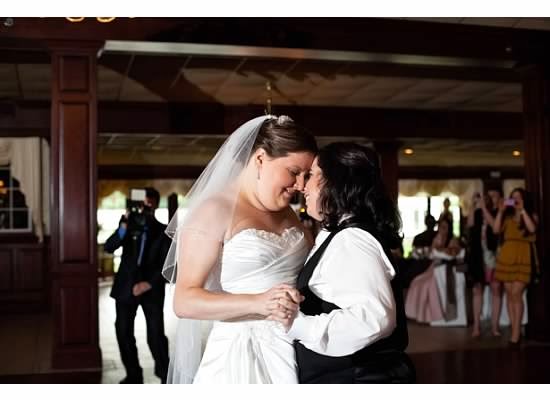
wedding
Tuesday, February 19, 2013

Monday, February 18, 2013
Building Community
Our rabbi has been working on doing some matchmaking between us and another queer couple at our synagogue. She once suggested that we check out a Tot Shabbat, but we felt awkward doing so without little ones of our own. Then a few weeks ago, she said she had been speaking about us to A&A, a couple with a 3-year-old and a 16-month old. She said they are house hunting so she had suggested they speak to us about it, and they were excited to connect since we are also planning a family. They gave her their contact information to pass on to us. I emailed them and we arranged to go out to dinner yesterday and it was just an amazing time. Their boys are adorable, and they are both awesome feminists who enjoy family and friends and adventure. Easygoing and very relaxed mothers, sharing equally in the smallest of tasks and trading off breastfeeding (they both have milk from having been pregnant) and not stressing over their children's energy and curiosity. We just had such a great time with them, and it's obvious that they are friends we would enjoy both on our own as well as with kids.
This followed closely on the tails of a recent date with my friend E and her wife. They came over a few weeks ago for "afternoon tea" and ended up staying til about 9:30 because we were having such great conversation. E and I were the closest of friends beginning my second year in New York, were roommates for a while, and eventually lost touch. I reached out to her recently and we reconnected over dinner before arranging to meet the wives. She is now married, closing on a house in New Jersey, and five months pregnant. I was - and am - so grateful for finding each other again, and at such a similar point in our lives.
All of this made me feel like I'm starting to settle into my life in Long Island. I miss my old friends who are at various points in their own lives, but it's so hard to stay in touch. My best friend N is now in Rockland County where she bought a house with her husband, my friend B just moved in with her boyfriend in Staten Island, and my friend Allyson has been less accessible since getting engaged last year. I'm struggling to stay close to them - with N remaining my #1 girl despite the distance - and while I will continue to fight for those friendships and try to keep them strong, it is a whole different kind of amazing to be building friendships as a couple with other couples. It's very new, feels very adult, and is truly what is making my new home feel like home. To have friends with similar values and in a similar place in life - and in the case of A&A, to actually live close to us - makes me feel happy and warm and at peace. These are the people we would gather together for a baby's first birthday or even a multi-family trip to Montauk or Provincetown. We now have someone we can join for activities at our synagogue - taking our kids to the Purim carnival, for example.
I'm not trying to put all the pressure on this one couple to be everything we need. They are just hope for me that part of growing up is developing this dynamic with various people, and I'm realizing how important that is to me. It's also kind of a freaky reality check that we are close to being at THAT point in our lives - that our peers are settling down and having families and wanting to have game nights instead of going out to the club. Nicole and I have always been the homebody, small-town types, but in our twenties, most of our peers were more of partiers. Every celebration revolved around the expectation of "going out," which generally involves dressing up and drinking and just not our type of fun. It's kind of amazing to feel us getting to a place that is more our speed, being surrounded by people who want to go camping and go out for frozen yogurt.
Maybe this strange island can become mine after all!
This followed closely on the tails of a recent date with my friend E and her wife. They came over a few weeks ago for "afternoon tea" and ended up staying til about 9:30 because we were having such great conversation. E and I were the closest of friends beginning my second year in New York, were roommates for a while, and eventually lost touch. I reached out to her recently and we reconnected over dinner before arranging to meet the wives. She is now married, closing on a house in New Jersey, and five months pregnant. I was - and am - so grateful for finding each other again, and at such a similar point in our lives.
All of this made me feel like I'm starting to settle into my life in Long Island. I miss my old friends who are at various points in their own lives, but it's so hard to stay in touch. My best friend N is now in Rockland County where she bought a house with her husband, my friend B just moved in with her boyfriend in Staten Island, and my friend Allyson has been less accessible since getting engaged last year. I'm struggling to stay close to them - with N remaining my #1 girl despite the distance - and while I will continue to fight for those friendships and try to keep them strong, it is a whole different kind of amazing to be building friendships as a couple with other couples. It's very new, feels very adult, and is truly what is making my new home feel like home. To have friends with similar values and in a similar place in life - and in the case of A&A, to actually live close to us - makes me feel happy and warm and at peace. These are the people we would gather together for a baby's first birthday or even a multi-family trip to Montauk or Provincetown. We now have someone we can join for activities at our synagogue - taking our kids to the Purim carnival, for example.
I'm not trying to put all the pressure on this one couple to be everything we need. They are just hope for me that part of growing up is developing this dynamic with various people, and I'm realizing how important that is to me. It's also kind of a freaky reality check that we are close to being at THAT point in our lives - that our peers are settling down and having families and wanting to have game nights instead of going out to the club. Nicole and I have always been the homebody, small-town types, but in our twenties, most of our peers were more of partiers. Every celebration revolved around the expectation of "going out," which generally involves dressing up and drinking and just not our type of fun. It's kind of amazing to feel us getting to a place that is more our speed, being surrounded by people who want to go camping and go out for frozen yogurt.
Maybe this strange island can become mine after all!
Sunday, February 10, 2013
Home Sweet Home
We had our first big snowstorm since moving into our house in early December. It was gorgeous and magical - but we don't have a super to shovel it for us!


Nicole said she wouldn't mind shoveling if I came outside to be with her. So we bundled up and headed out early Saturday morning.


Jack watching Nicole brush off her car Friday, before the big storm

Saturday morning
Nicole said she wouldn't mind shoveling if I came outside to be with her. So we bundled up and headed out early Saturday morning.

Nicole is thrilled

me offering moral support
While outside, we met all three neighbors that we border - but not one of them said hello first! I've been in NYC for 8.5 years and still sometimes struggle with the fact that neighbors don't wave and say hello when you walk or drive by. I saw the man next to us out shoveling and he kept sort of glancing over at us, so I smiled and said, "Good morning!" He returned the greeting and then asked us how we like the neighborhood, etc. Then we saw the neighbor to our left, an older man who was huffing and puffing red-cheeked over his snowblower and sort of stuttering out an apology as snow arced over us.
Then we went to the back to shovel that piece of sidewalk. (Our driveway goes out into the side street, behind the corner house next to us.) To our delight, we noticed our small section of the sidewalk and our driveway up to Nicole's car had been snowblown! So we just had to shovel the small amount that gets left behind. I noticed the neighbor wife behind us out on her lawn sort of looking at us, so after a continued silence, I again initiated contact by saying, "Good morning!" She struck up conversation with us, introducing herself and welcoming us to the neighborhood. It turns out she was outside as a moral-supporter too, while her husband was down the block helping the elderly neighbor. Nicole asked if he was the one who had done our driveway, and she said yes. How considerate!! We thanked her profusely and chatted while we brushed snow off the car.
It's amazing how friendly, warm, and welcoming people can be when you push past their initial suspicious nature. They're curious but don't want to be the first ones to reach out. Are they afraid of rejection, that they'll be ignored or that someone will be rude to them? I'm not sure. It's a headscratcher to me. But this southern girl will get to these hardened New Yorkers, just you wait. I'm planning to bake cookies for the neighbor behind us to show our appreciation for the snow help. Resist me. Go ahead, I dare you.
I still remember the shock and slight suspicion on my neighbors' faces in our last apartment when I brought each family on our hall a bag of from-scratch Christmas cookies. And I brought my rabbi half of the sticky toffee pudding I'd made the afternoon of one of our meetings so that she could take it home to her husband and daughter. It warmed her through to her lap because it had just come out of the oven. And my second year here, as my internship was coming to an end, I bought a cake for the nice guys at Subway who made my day with their kindness when I went there for lunch every day. I only didn't bake them cookies because my cubicle-neighbor said, "awww, sweet girl - they're not going to trust that. They'll think they're poisoned and throw them away. You don't just give store employees baked treats. It's not normal, and you'll waste your energy because they won't eat them." Whaaaa? Devastated.
My mama taught me manners, my culture taught me civility, and I firmly believe that baking from scratch with real butter is an expression of love. No amount of time here will turn me into a snubber, much to Nicole's embarrassed chagrin. I need community around me. This neighborhood will be MY neighborhood - I will conquer it yet!
Intro to Judaism - Week 13
My conversion is on the horizon!!!!!!!!!
I have been feeling so ready and eager but have resisted initiating the conversation with my rabbi because I wanted it to come from her. I just needed to know that she had made her own assessment of my readiness, without my own excitement inadvertently pushing my agenda or rushing the process. Her un-coerced and voluntary assessment was really important to me. But I am THERE. I have soooo much still to learn, and will for my entire life, but I'm ready to formalize my commitment to this ongoing journey. I'm ready to participate in this adventure alongside my people, my community. My heart, my mind, my willingness to commit is ready and there.
The conversation came about because Rabbi asked how often my parents come up and if I would want to invite them to be part of it. I said yes, I'd love to include them if they feel comfortable, and they are coming up at the end of April. I said I'm not sure if that's realistic. Rabbi asked if I feel ready, and I said absolutely. Then she said she feels I'm ready too, and that people often take the class first to get more familiar and then need some time afterward. However, it took so long for me to get into the class that it puts me in a different place because I had already been going to services and studying with the rabbi for some time. She said April seems completely feasible.
Rabbi said we will talk next time more about exact details. I'm SO EXCITED and so happy! I may have cried a bit when Rabbi said she feels I am ready after the class ends. (Me? Emotional? Shocker, I know.) I really didn't anticipate how much it would move me just to have her say that. It's sort of like being blissfully in love with someone and talking about marriage with them and knowing it's heading there, and yet it's still so emotionally powerful when you actually get engaged. It's like it's really out there, it's really happening, here it comes!!!
I'm so humbled to feel welcomed into the Jewish community by my rabbi. I don't feel worthy (and don't think I ever could), and am just so honored.
Oh boy - if I'm this much of a mess over just this part of it, I need to steel myself for the actual conversion!
I have been feeling so ready and eager but have resisted initiating the conversation with my rabbi because I wanted it to come from her. I just needed to know that she had made her own assessment of my readiness, without my own excitement inadvertently pushing my agenda or rushing the process. Her un-coerced and voluntary assessment was really important to me. But I am THERE. I have soooo much still to learn, and will for my entire life, but I'm ready to formalize my commitment to this ongoing journey. I'm ready to participate in this adventure alongside my people, my community. My heart, my mind, my willingness to commit is ready and there.
The conversation came about because Rabbi asked how often my parents come up and if I would want to invite them to be part of it. I said yes, I'd love to include them if they feel comfortable, and they are coming up at the end of April. I said I'm not sure if that's realistic. Rabbi asked if I feel ready, and I said absolutely. Then she said she feels I'm ready too, and that people often take the class first to get more familiar and then need some time afterward. However, it took so long for me to get into the class that it puts me in a different place because I had already been going to services and studying with the rabbi for some time. She said April seems completely feasible.
Rabbi said we will talk next time more about exact details. I'm SO EXCITED and so happy! I may have cried a bit when Rabbi said she feels I am ready after the class ends. (Me? Emotional? Shocker, I know.) I really didn't anticipate how much it would move me just to have her say that. It's sort of like being blissfully in love with someone and talking about marriage with them and knowing it's heading there, and yet it's still so emotionally powerful when you actually get engaged. It's like it's really out there, it's really happening, here it comes!!!
I'm so humbled to feel welcomed into the Jewish community by my rabbi. I don't feel worthy (and don't think I ever could), and am just so honored.
Oh boy - if I'm this much of a mess over just this part of it, I need to steel myself for the actual conversion!
Sunday, February 3, 2013
The Work Decision
Nicole and I have been talking more and more about babies. As much as she teases about not being ready or wanting to wait ten years, she is being playful and also feeling the responsibility of keeping us in check since I'm so emotional about it. But she has been very open lately about being mentally and emotionally ready, and has said that if money weren't an issue, she would be thrilled to start trying like yesterday. But the finances are killing us.
We are enjoying being in our new house together, but we don't feel that it's a phase we need to drag out. We wanted the house because we were ready for kids and didn't want to deal with outgrowing our two-bedroom apartment (yes, we had a 2BR so that we wouldn't feel pressured to move out) and having to house-hunt while raising a toddler. It was also a great time with record-low interest rates. Now we're here and settled and ready to fill those bedrooms! Yes, there are things we will enjoy doing and working on, but nothing that pregnancy and parenthood will preclude us from.
We know that we will never feel 100% financially comfortable when making the decision to conceive, unless we wait until we're 45. But we need to be able to afford childcare, and other expenses are currently using up the income that would be going toward that - and there isn't much wiggle room outside of that childcare budget as it is. Right now most of it is going to pay Nicole's parents back, because they loaned us money toward closing costs. If we pay at our current rate, it will take us a total of two years to finish paying them. We can try to pare that down by paying a little more and by giving them tax return money, but it will only affect it by a matter of a few months, when we had originally planned to start trying for a baby this spring. It's a harsh and sad reality.
Then there are the larger costs that we somehow have to save toward - primarily repaving the horribly broken up driveway and converting to gas when our old oil tank dies in about five years. Nicole's car is paid off and it's a 2009 - since we are a single-car family, there will unfortunately come a day when we have to get a new car. We either need to be saving toward that now, or be prepared to take on a car payment which isn't an expense we currently have to budget for.
I know it'll never be perfect - but it seems damn un-doable right now, and it sucks that money is our only real obstacle.
One thing I have been thinking a lot about recently is whether it'd be worth doing part-time work in the evening to save on childcare. Nicole works 8:00-4:00 and is home by 4:15 or 4:20. If I worked from, say, 5:00-8:00, this would be perfectly doable. (And there are a TON of part-time evening and/or weekend jobs in social work.) Nicole and I wouldn't see each other much on weeknights for a while, but you do what you have to do to raise your family. Certainly other families make harder sacrifices than that to make it work. Once the kids are in school, I could go back to full-time work, and Nicole's schedule would allow for our kids not having to be in after-school until all hours.
Right now I'm getting home around 6:30, if I leave work right at 5:00. The thought of only seeing my baby for MAYBE two hours before she goes to sleep is heartbreaking. I know the working parent has to do this, and most families cannot afford for either parent to be home during the day. But if we can find a way to swing it, it would mean so much to me. It's not just about ME getting to see the baby, either - it's about her spending more time with strangers than with her parents. If I was leaving her at home with Nicole all day, it wouldn't be affecting me like this. Of course I would miss her and would hate missing out on so much time with her, but at least I'd know she was with one of her parents. Arranging this would make the sacrifice worth it until we get out of the baby years.
However, I'm not sure if part-time income would be enough to help with the other expenses. Getting rid of childcare would be immensely helpful, but there are still other places my income goes. Nicole's income can't take on the whole mortgage and my student loans, so I have to make enough to be able to continue contributing significantly toward those expenses. If childcare costs between $1000 and $1200 a month, then we can at least live on that much less than my current income. However, I'm a supervisor now, and part-time work would not be administrative. It would likely be counseling or other direct practice work, which pays less. So not only would I be paid on part-time hours, but in a position that already pays less on a per-hour basis. I can't expect that working half the hours will lead to half the income - I'm pretty sure it will be less than that.
I need to figure out what we could live on, and then somehow figure out what positions like that pay so that I know whether this plan is even feasible. It's my #1 choice, but I'm not sure whether it's really even an option.
We are enjoying being in our new house together, but we don't feel that it's a phase we need to drag out. We wanted the house because we were ready for kids and didn't want to deal with outgrowing our two-bedroom apartment (yes, we had a 2BR so that we wouldn't feel pressured to move out) and having to house-hunt while raising a toddler. It was also a great time with record-low interest rates. Now we're here and settled and ready to fill those bedrooms! Yes, there are things we will enjoy doing and working on, but nothing that pregnancy and parenthood will preclude us from.
We know that we will never feel 100% financially comfortable when making the decision to conceive, unless we wait until we're 45. But we need to be able to afford childcare, and other expenses are currently using up the income that would be going toward that - and there isn't much wiggle room outside of that childcare budget as it is. Right now most of it is going to pay Nicole's parents back, because they loaned us money toward closing costs. If we pay at our current rate, it will take us a total of two years to finish paying them. We can try to pare that down by paying a little more and by giving them tax return money, but it will only affect it by a matter of a few months, when we had originally planned to start trying for a baby this spring. It's a harsh and sad reality.
Then there are the larger costs that we somehow have to save toward - primarily repaving the horribly broken up driveway and converting to gas when our old oil tank dies in about five years. Nicole's car is paid off and it's a 2009 - since we are a single-car family, there will unfortunately come a day when we have to get a new car. We either need to be saving toward that now, or be prepared to take on a car payment which isn't an expense we currently have to budget for.
I know it'll never be perfect - but it seems damn un-doable right now, and it sucks that money is our only real obstacle.
One thing I have been thinking a lot about recently is whether it'd be worth doing part-time work in the evening to save on childcare. Nicole works 8:00-4:00 and is home by 4:15 or 4:20. If I worked from, say, 5:00-8:00, this would be perfectly doable. (And there are a TON of part-time evening and/or weekend jobs in social work.) Nicole and I wouldn't see each other much on weeknights for a while, but you do what you have to do to raise your family. Certainly other families make harder sacrifices than that to make it work. Once the kids are in school, I could go back to full-time work, and Nicole's schedule would allow for our kids not having to be in after-school until all hours.
Right now I'm getting home around 6:30, if I leave work right at 5:00. The thought of only seeing my baby for MAYBE two hours before she goes to sleep is heartbreaking. I know the working parent has to do this, and most families cannot afford for either parent to be home during the day. But if we can find a way to swing it, it would mean so much to me. It's not just about ME getting to see the baby, either - it's about her spending more time with strangers than with her parents. If I was leaving her at home with Nicole all day, it wouldn't be affecting me like this. Of course I would miss her and would hate missing out on so much time with her, but at least I'd know she was with one of her parents. Arranging this would make the sacrifice worth it until we get out of the baby years.
However, I'm not sure if part-time income would be enough to help with the other expenses. Getting rid of childcare would be immensely helpful, but there are still other places my income goes. Nicole's income can't take on the whole mortgage and my student loans, so I have to make enough to be able to continue contributing significantly toward those expenses. If childcare costs between $1000 and $1200 a month, then we can at least live on that much less than my current income. However, I'm a supervisor now, and part-time work would not be administrative. It would likely be counseling or other direct practice work, which pays less. So not only would I be paid on part-time hours, but in a position that already pays less on a per-hour basis. I can't expect that working half the hours will lead to half the income - I'm pretty sure it will be less than that.
I need to figure out what we could live on, and then somehow figure out what positions like that pay so that I know whether this plan is even feasible. It's my #1 choice, but I'm not sure whether it's really even an option.
Tuesday, January 29, 2013
Intro to Judaism - Week 12
There are so many questions in this week's suggested topic that I will probably work better responding to each one individually, rather than writing an essay the way I typically do.
Disclaimer: I reserve the right to have my views on God change and evolve dramatically throughout my lifetime. My responses here reflect only what I believe as of the next fifteen minutes or so. Returning to this conversation at any future point could yield different results.
What do I believe about God?
I believe God is a divine and eternal singular entity, and I believe that this Divine Presence is in every soul and every living thing on Earth. I believe that God is a life-giving source. I do not believe that God makes it a habit to interfere on our behalf or our enemies' behalf at the request of individuals with their own motives and self-serving desires. I believe that God is hands-off for the most part, holding us responsible for how we handle what God has set in motion. I believe that I am responsible for my own fate, and that being passive or inactive in my own life does not make the consequence part of "God's plan." I do not believe in sitting back and waiting for God to make a decision for me.
How has my view of God changed over time?
My childhood view of God was that of a Protective Father, a king on a throne. I do still find God to be comforting, but more in a sense of helping me cope and find peace rather than expecting God to protect me from anything negative. This is much like the evolution of one's views of one's own parents. As a child, they seem invincible and - if you are blessed with the safe childhood that I had - you feel 100% comfortable and protected from harm. It seems there is nothing they can't handle. Then you grow up and realize there are outside influences and your parents can only protect you so much - but you appreciate the self-esteem and healthy coping skills that they instilled in you, as well as their ongoing support.
What is my relationship, if any, with God? How does this relationship affect my actions and decisions?
This is tough to articulate, but I'll try. I feel like God's partner in the mission of tikkun olam - repairing the world. (This also happens to be my agency's motto, so I'm familiar with it beyond my more recent and intensive exposure to Judaism.) I am God's hand, God's tool. When I see a homeless woman begging on the subway, I buy her a slice of pizza because God can't. God wants to help her, so I help God help her. And when she says, "Thank you, God bless you," I think she knows this. I feel like this in everything that I do, and it makes me more aware of the impact of my decisions. Preparing to take on the yoke of the Torah and enter into the covenant has increased this awareness a hundred-fold. It has made me feel God more active in my life through my actions.
What do I believe about the relationship between the existence of God and the existence of evil in the world?
Throughout my reading of Finding God, which I referenced a couple posts back, I noticed the question of evil come up in relation to every Jewish scholar/philosopher. Personally, I didn't get why the author felt like each school of thought needed to respond to this, because to me it isn't an issue. Evil and God have nothing to do with one another in my mind. It seems clear to me that evil is a creation of humans, and if we believe in free will, how can we blame God for this? It is our own responsibility to show kindness, compassion, and justice, and to confront evil in others. I also struggle with the word "evil" altogether, because it seems to have an unredeemable connotation, and I believe very little - if anything - is pure, unredeemable evil. I believe there is pain and trauma behind most acts of cruelty. People can be as broken as our world is, and broken people may break people. It is our responsibility, as individuals and as a society, to heal and to stop this cycle. This has nothing to do with God and everything to do with us and our own obligation to the world and one another.
Do I believe I can communicate with God, and if so, how?
I personally don't feel that I have a reciprocal dialogue with God, but I communicate with God through prayer, which is often in the form of letting myself feel a particular emotion as strongly as possible without having to try to give words to it. I also feel in communication with God when I'm in nature, particularly in the Blue Ridge mountains of my homeland, but really anywhere that brings me back to the rawness of God's creation. This has always, always been true for me, even during my ten-year hiatus from organized religion. I also believe that I am communicating with God when I am acting as God's partner as described earlier. Action can be its own form of prayer.
What are your thoughts about the differences between Chanukah and Christmas and other religious celebrations? How might you handle the two holidays if there is one Jewish and one non-Jewish partner in your family?
I am fortunate that we are in agreement on identifying as a Jewish family. The difficulty comes in letting go of Christian traditions that have much nostalgia attached to them and which continue to be important to our families of origin. The primary difference for us is that my family celebrated them religiously and Nicole's celebrated them secularly. I worry about making Chanukah a bigger holiday than it is intended to be in order to "compete" with the commercialization of Christmas, but at the same time, I acknowledge that this is pretty normative among American Jews. I do think we don't need an excess of gifts - the disgusting level of consumerism that is associated with the December holidays is one thing I'm very happy and relieved to give up, and I'd like to keep Chanukah gift-giving a bit simpler. I think feeling secure in my Jewish identity will allow me to enjoy the festivity of someone else's celebrations (such as store decorations and lights on houses) without feeling afraid that I'll feel like I'm missing out. I have heard non-Jews talk about how they drive through Brooklyn looking at sukkahs during Sukkot because they're so beautiful and amazing to see. They don't say, "Man, I really wish I was part of that culture and could build a sukkah..." They just enjoy the beauty of someone else's culture. I don't see why that can't be my eventual view of Christmas.
Judaism does not recognize Jesus as the son of God or as the Messiah, nor does Judaism include the New Testament in its Holy Scriptures. How do I feel about this? What are the most apparent differences between Judaism and Christianity to me?
The most apparent differences to me are:
1. Jews do not believe the Messiah has come and that Jesus is God. The Messianic Age will come about when the world is perfect, which it has not yet been, and we have a responsibility to bring that about. We are responsible for our own salvation.
2. Jews do not emphasize the afterlife and are more concerned about how one lives in the here-and-now, without a promise of eternal reward or threat of damnation.
3. Jews do not believe that you have to be an exclusive member of the club in order to have a place in the world-to-come. Any righteous person shares the same fate, and a righteous non-Jew is better off than a non-observant and non-righteous Jew.
4. Jews emphasize works and actions over declarations of faith.
5. Jews openly and warmly welcome sincere converts but do not actively seek them out. Jews would rather have a small, sincere community than to risk diluting Jewish values and integrity for the sake of increasing numbers.
6. Jews emphasize being part of a people with a history and a destiny, being part of a community and culture rich in traditions and rituals, rather than focusing so much on one's individual relationship with God. Converting to Judaism is about much more than feeling called to a particular faith and set of beliefs.
How do I feel about all this? All of the above points are exactly why I feel I belong in the Jewish community.
What are the similarities?
Believing in one God, observing a weekly day of rest through worship and praise as a community, studying Biblical texts in an effort to relate them to our modern lives, being led in prayer and song by a clergy member, blessing food before eating, valuing family, educating one's children through weekly classes and other congregational activities, the obligation of helping those in need.
What holiday memories of my youth are especially dear to me?
I come from a family full of traditions. I've always known that marriage would mean adapting those traditions to fit my new family, incorporating what we can from both of our traditions as well as making our own. Judaism just requires even more adaptation in order to keep what's important to me. For instance, some cherished holiday memories include watching Christmas movies with mugs of cocoa and warm socks - couldn't this be a winter tradition with a different type of movie? Another warm memory is of racing downstairs to a pile of presents and being ecstatic that Santa came. I have struggled for years with whether I wanted to continue the tradition of Santa with my own kids, for a multitude of reasons, and always felt like I wanted to downsize the excessive gift-giving to decrease the opportunity for greed and envy. Judaism gives me a good reason and a strong framework for making this adjustment by eliminating Christmas altogether and "replacing" it with a more minor holiday. I'm also just not struggling as much anymore with my own nostalgia and memories because I'm excited to create new ones for my own kids, which certainly don't need to replicate my own childhood.
Disclaimer: I reserve the right to have my views on God change and evolve dramatically throughout my lifetime. My responses here reflect only what I believe as of the next fifteen minutes or so. Returning to this conversation at any future point could yield different results.
What do I believe about God?
I believe God is a divine and eternal singular entity, and I believe that this Divine Presence is in every soul and every living thing on Earth. I believe that God is a life-giving source. I do not believe that God makes it a habit to interfere on our behalf or our enemies' behalf at the request of individuals with their own motives and self-serving desires. I believe that God is hands-off for the most part, holding us responsible for how we handle what God has set in motion. I believe that I am responsible for my own fate, and that being passive or inactive in my own life does not make the consequence part of "God's plan." I do not believe in sitting back and waiting for God to make a decision for me.
How has my view of God changed over time?
My childhood view of God was that of a Protective Father, a king on a throne. I do still find God to be comforting, but more in a sense of helping me cope and find peace rather than expecting God to protect me from anything negative. This is much like the evolution of one's views of one's own parents. As a child, they seem invincible and - if you are blessed with the safe childhood that I had - you feel 100% comfortable and protected from harm. It seems there is nothing they can't handle. Then you grow up and realize there are outside influences and your parents can only protect you so much - but you appreciate the self-esteem and healthy coping skills that they instilled in you, as well as their ongoing support.
What is my relationship, if any, with God? How does this relationship affect my actions and decisions?
This is tough to articulate, but I'll try. I feel like God's partner in the mission of tikkun olam - repairing the world. (This also happens to be my agency's motto, so I'm familiar with it beyond my more recent and intensive exposure to Judaism.) I am God's hand, God's tool. When I see a homeless woman begging on the subway, I buy her a slice of pizza because God can't. God wants to help her, so I help God help her. And when she says, "Thank you, God bless you," I think she knows this. I feel like this in everything that I do, and it makes me more aware of the impact of my decisions. Preparing to take on the yoke of the Torah and enter into the covenant has increased this awareness a hundred-fold. It has made me feel God more active in my life through my actions.
What do I believe about the relationship between the existence of God and the existence of evil in the world?
Throughout my reading of Finding God, which I referenced a couple posts back, I noticed the question of evil come up in relation to every Jewish scholar/philosopher. Personally, I didn't get why the author felt like each school of thought needed to respond to this, because to me it isn't an issue. Evil and God have nothing to do with one another in my mind. It seems clear to me that evil is a creation of humans, and if we believe in free will, how can we blame God for this? It is our own responsibility to show kindness, compassion, and justice, and to confront evil in others. I also struggle with the word "evil" altogether, because it seems to have an unredeemable connotation, and I believe very little - if anything - is pure, unredeemable evil. I believe there is pain and trauma behind most acts of cruelty. People can be as broken as our world is, and broken people may break people. It is our responsibility, as individuals and as a society, to heal and to stop this cycle. This has nothing to do with God and everything to do with us and our own obligation to the world and one another.
Do I believe I can communicate with God, and if so, how?
I personally don't feel that I have a reciprocal dialogue with God, but I communicate with God through prayer, which is often in the form of letting myself feel a particular emotion as strongly as possible without having to try to give words to it. I also feel in communication with God when I'm in nature, particularly in the Blue Ridge mountains of my homeland, but really anywhere that brings me back to the rawness of God's creation. This has always, always been true for me, even during my ten-year hiatus from organized religion. I also believe that I am communicating with God when I am acting as God's partner as described earlier. Action can be its own form of prayer.
What are your thoughts about the differences between Chanukah and Christmas and other religious celebrations? How might you handle the two holidays if there is one Jewish and one non-Jewish partner in your family?
I am fortunate that we are in agreement on identifying as a Jewish family. The difficulty comes in letting go of Christian traditions that have much nostalgia attached to them and which continue to be important to our families of origin. The primary difference for us is that my family celebrated them religiously and Nicole's celebrated them secularly. I worry about making Chanukah a bigger holiday than it is intended to be in order to "compete" with the commercialization of Christmas, but at the same time, I acknowledge that this is pretty normative among American Jews. I do think we don't need an excess of gifts - the disgusting level of consumerism that is associated with the December holidays is one thing I'm very happy and relieved to give up, and I'd like to keep Chanukah gift-giving a bit simpler. I think feeling secure in my Jewish identity will allow me to enjoy the festivity of someone else's celebrations (such as store decorations and lights on houses) without feeling afraid that I'll feel like I'm missing out. I have heard non-Jews talk about how they drive through Brooklyn looking at sukkahs during Sukkot because they're so beautiful and amazing to see. They don't say, "Man, I really wish I was part of that culture and could build a sukkah..." They just enjoy the beauty of someone else's culture. I don't see why that can't be my eventual view of Christmas.
Judaism does not recognize Jesus as the son of God or as the Messiah, nor does Judaism include the New Testament in its Holy Scriptures. How do I feel about this? What are the most apparent differences between Judaism and Christianity to me?
The most apparent differences to me are:
1. Jews do not believe the Messiah has come and that Jesus is God. The Messianic Age will come about when the world is perfect, which it has not yet been, and we have a responsibility to bring that about. We are responsible for our own salvation.
2. Jews do not emphasize the afterlife and are more concerned about how one lives in the here-and-now, without a promise of eternal reward or threat of damnation.
3. Jews do not believe that you have to be an exclusive member of the club in order to have a place in the world-to-come. Any righteous person shares the same fate, and a righteous non-Jew is better off than a non-observant and non-righteous Jew.
4. Jews emphasize works and actions over declarations of faith.
5. Jews openly and warmly welcome sincere converts but do not actively seek them out. Jews would rather have a small, sincere community than to risk diluting Jewish values and integrity for the sake of increasing numbers.
6. Jews emphasize being part of a people with a history and a destiny, being part of a community and culture rich in traditions and rituals, rather than focusing so much on one's individual relationship with God. Converting to Judaism is about much more than feeling called to a particular faith and set of beliefs.
How do I feel about all this? All of the above points are exactly why I feel I belong in the Jewish community.
What are the similarities?
Believing in one God, observing a weekly day of rest through worship and praise as a community, studying Biblical texts in an effort to relate them to our modern lives, being led in prayer and song by a clergy member, blessing food before eating, valuing family, educating one's children through weekly classes and other congregational activities, the obligation of helping those in need.
What holiday memories of my youth are especially dear to me?
I come from a family full of traditions. I've always known that marriage would mean adapting those traditions to fit my new family, incorporating what we can from both of our traditions as well as making our own. Judaism just requires even more adaptation in order to keep what's important to me. For instance, some cherished holiday memories include watching Christmas movies with mugs of cocoa and warm socks - couldn't this be a winter tradition with a different type of movie? Another warm memory is of racing downstairs to a pile of presents and being ecstatic that Santa came. I have struggled for years with whether I wanted to continue the tradition of Santa with my own kids, for a multitude of reasons, and always felt like I wanted to downsize the excessive gift-giving to decrease the opportunity for greed and envy. Judaism gives me a good reason and a strong framework for making this adjustment by eliminating Christmas altogether and "replacing" it with a more minor holiday. I'm also just not struggling as much anymore with my own nostalgia and memories because I'm excited to create new ones for my own kids, which certainly don't need to replicate my own childhood.
Sunday, January 27, 2013
Choosing a Hebrew Name
Disclaimer: I will not take on my Hebrew name until conversion, so I will not really be sharing it with anyone yet. However, I wanted to write about the process of finding my name, and since all of four people in my life read this blog (two of them rabbis and the other two immediate family), I'm okay with talking about it in this forum.
From Anita Diamant's book Choosing Judaism (with lots deleted throughout to pare it down):
Converts have always selected Hebrew names that speak to them personally...There are 2,800 personal names in the Hebrew Bible, and although fewer than five percent of those are in current use, all of them are yours to consider.
Many of the names in the Bible are theophoric, meaning that they exalt God...Others describe the circumstances of birth or a person's historical role...The Bible also contains many names that refer to the natural universe: Deborah--bee; Jonah--dove; Tamar--palm tree.
The lexicon of Hebrew names was not handed down from Mount Sinai; it has grown and changed throughout history and in response to local customs and fashions. Take, for example, the quintessentially Jewish name Esther, which is Persian in origin and shares its root with the fertility goddess, Ishtar. When the state of Israel was founded, in 1948, scores of new Hebrew names were invented and many old ones reclaimed. Your rabbi should be able to provide you with guidance, lists, even suggestions. Once you find one or two names that you especially like, you might ask the rabbi to help you find some texts about the biblical character or name you've selected.
But you may not have to look any further than your own given name for inspiration. Some names translate beautifully. Regina or Gina, which means "queen," can give rise to Malkah, which also means "queen." If your parents named you David, David (pronounced "Dah-veed") can be your Hebrew name as well...
Many converts follow the contemporary American custom of selecting a Hebrew name based on the initial letter or sound of their English name. Thus, Robert chooses Reuben, and Mary selects Miriam. But don't feel obligated by an accident of the alphabet. Since Jewish babies are usually named after parents or grandparents, some converts choose a name to honor someone in their own lives...
But there's no rule that you have to find an orthographic or historical connection between your name and your Hebrew name. This is an area of Jewish practice where there are few rules or customs, so find a name that feels right and has meaning for you.
My friend Allyson asked me a few days ago whether I had chosen a Hebrew name yet. I said that it has been on my mind off and on, as far as just knowing that I will do this and kind of wondering how, but that I hadn't spent a lot of time thinking about it yet because I'm not really sure how to start and was kind of hoping it would just come to me. She said that often people choose to honor the memory of a deceased loved one, such as by choosing a name that begins with the same letter of that relative's name. Nicole's middle name is that of her great-grandmother whom she has never met.
I immediately thought of my maternal grandmother who died when I was twelve years old. She was my favorite grandparent and I still cry for missing her if I let myself think about her too much. Everything in our extended family kind of fell apart after her death, so I also associate her with a more peaceful and connected time. Also, since my mother is the youngest in her family, we are the youngest cousins. This means my grandmother got to see our other cousins with their spouses, and some even with their children, while she didn't even get to see me go to high school. I struggled for a long time with feeling cheated out of her knowing me as an adult - and me knowing HER as an adult. Oh the questions I would ask her, the conversations we would have, that never would have occurred to me or seemed important at twelve!
My grandmother was adopted as an infant, born in Canada as Stella by a woman who feared my grandmother's father. My great-grandparents - who lived on a farm in Auburn, NY - took her in without ever legally formalizing the adoption, because that would have required reaching out to the father, and my grandmother's birth mother was afraid to have any further contact with him. My grandmother was renamed Bertha Mabel Miller (this maiden name coincidentally being the same as my father's surname). Her name is German, as we are of very mixed ancestry but with a strong German heritage.
I started my search by looking at Hebrew names that started with B, as Allyson suggested. I didn't want the name to be completely arbitrary, though, sharing only the first letter, so I looked for a name that may sound similar. The closest I found was Betuel, and it just didn't feel right. I tumbled it around in my mind and in my mouth for quite some time and just couldn't connect with it. It then occurred to me to look up the meaning of Bertha and go from there. Bertha is a German name meaning "bright, radiant." This immediately resonated with me, as my grandmother was easygoing, content, and full of joy and life - definitely something that is also true for me. How perfect for me to have a name that also means "bright" and to feel connected to her in that way. I looked that up and found the name Ziva. It immediately felt right.
Not only does this name connect me to my beloved grandmother, but also to our shared sense of spirituality. My grandmother was Baptist, played Baptist hymns on her piano (charming to me as a Catholic child), and just exuded pure and solid faith. Tying in my Hebrew name to her feels more natural and appropriate than if I had a minimally observant Jewish relative whose name I could build on. We share a deep and trusting love of God, and if she were here, I feel confident that she would be supportive of my journey.
Subscribe to:
Comments (Atom)